
Welcome to the lesson on Defensive Riding and Escape Path Planning. As a motorcyclist in Sweden, anticipating hazards and always having a clear exit strategy is paramount for safety. This lesson builds on understanding general risks by teaching you proactive techniques to avoid dangerous situations before they escalate, directly preparing you for complex scenarios on the Swedish roads and in the theory exam.

Motorcycle riding demands a high level of vigilance and skill, especially in dynamic traffic environments. This lesson introduces the fundamental principles of defensive riding and the critical technique of escape path planning, essential components of the Swedish Motorcycle Theory Course. By mastering these concepts, you will learn to anticipate potential dangers, actively manage the space around your motorcycle, and significantly reduce the risk of collisions. This proactive, forward-thinking approach dramatically enhances safety and is a hallmark of advanced, responsible riders.
Defensive riding is far more than simply obeying traffic laws; it is a systematic, proactive mindset that treats every journey as a series of potential threats. It involves continuously anticipating hazards, scanning your environment, and taking action to avoid danger before it fully materialises. This approach places the responsibility for safety firmly with the rider, empowering them to control their own risk exposure.
Instead of merely reacting to events as they unfold, a defensive rider actively seeks out information, predicts potential conflicts, and prepares a strategy for avoidance. This constant state of readiness allows for smoother, more controlled reactions, which are crucial for motorcyclists who are more vulnerable than occupants of larger vehicles.
At the heart of defensive riding is the concept of an "escape path." An escape path is a clear, reachable space in the riding environment that remains free of obstacles, other road users, or road-edge hazards. It is a vital safety buffer, providing an immediate option to move into if a threat suddenly appears. Maintaining a viable escape path gives you precious extra reaction time and maneuvering space, dramatically reducing the chances of being trapped in a dangerous situation.
Escape paths can take several forms, depending on the nature of the potential threat and the available space:
The importance of continuously identifying and preserving an escape path cannot be overstated for motorcyclists. From a safety physics perspective, maintaining an escape path provides several benefits:
Legally, Swedish law obliges all road users to "keep a safe distance and avoid endangering others" (Trafikförordning 3 kap. 3 §). For motorcyclists, maintaining an escape path is the practical embodiment of this requirement. It demonstrates responsible and controlled riding, aligning with the expectations of the Swedish Traffic Ordinance.
Effective defensive riding relies on several interconnected principles that guide a rider's actions and decision-making.
This principle involves an ongoing visual and auditory assessment of your entire riding environment. You must constantly prioritise zones where hazards are most likely to materialise. This goes beyond just looking ahead; it requires regular head-turns, effective use of peripheral vision, and mentally mapping the surrounding traffic. The goal is to detect emerging risks early enough to take action and preserve or create an escape path. This includes scanning intersections, observing driver body language, and monitoring vehicles in your mirrors.
Space management is the deliberate placement of your motorcycle within the lane (or between lanes) to maximise usable free space. Your lane position directly influences the size and quality of your available escape paths. By consciously choosing where to ride, you can create a larger buffer for evasive steering or braking without colliding with other road users. This affects decisions such as your following distance, lane choice, and speed selection. For instance, positioning yourself slightly to one side of the lane can open up a larger lateral escape path on the other side.
Identifying an escape path involves locating an immediate, unobstructed corridor that you can enter within your combined reaction and manoeuvre time. This path must be wide enough for your motorcycle plus a safety margin (approximately 0.3 metres). In dense traffic, this assessment needs to be re-evaluated frequently, ideally every 2–3 seconds, as conditions constantly change.
Dynamic path maintenance is the continuous adjustment of your speed, lane position, or trajectory to keep that identified escape path clear. This means actively preventing your escape path from being compromised by other vehicles, lane changes, or pedestrians. It often requires proactive deceleration or a preemptive shift in lane position.
Your ability to react quickly and execute a manoeuvre is fundamental to using an escape path effectively. Reaction time is the sum of:
This combined Perception-Reaction Time (PRT) is typically estimated at 2.5 seconds for most road-user modelling in Sweden. This PRT directly influences the required length of your forward escape path, as a significant distance is covered before you even begin to brake. For example, at 70 km/h, you travel roughly 30 metres during the 2.5 seconds of PRT before any braking takes effect, even before considering the braking distance itself.
Braking distance is calculated as d = v * PRT + v^2 / (2a), where a is deceleration (approximately 5 m/s² for a motorcycle with ABS on dry pavement). Understanding these distances highlights why a large, clear escape path is so vital.
Defensive riding isn't a static concept; it's a continuous, dynamic process. The "Integrated Defensive Loop" describes the recurring sequence of actions a rider performs:
Observe: Continuously scan the environment using both peripheral and focal vision. Look far ahead, check mirrors frequently, and perform shoulder checks.
Assess: Evaluate identified observations for potential threats. Categorise them as immediate (within ≤2 seconds) or developing (within 2–5 seconds).
Plan Escape Path: Based on your assessment, identify the most viable forward, lateral, or combined escape path.
Adjust Speed & Position: Modify your speed and lane position to maintain the identified escape path, creating necessary buffers and increasing visibility.
Re-Observe: The cycle immediately repeats, constantly updating your mental map of the riding environment. This continuous loop should ideally repeat every 2–3 seconds in dense traffic.
Defensive riding and escape path planning are not just good practice; they are deeply rooted in Swedish traffic law, particularly the Trafikförordningen (Swedish Traffic Ordinance).
Trafikförordningen 3 kap. 3 § states: "Every road user shall keep a distance that allows them to stop safely without endangering others."
This mandatory rule applies to all road users, including motorcyclists, on all road types and in all weather conditions. It is the legal cornerstone for maintaining a forward escape path. The rationale is to guarantee sufficient space for emergency stopping and manoeuvring. A common guideline for safe following distance is the "3-second rule" in good conditions, which should be extended to 4 seconds or more in adverse weather.
Trafikförordningen 4 kap. 2 § states: "Vehicles must stay within the lane markings unless overtaking or avoiding obstacles."
This regulation prohibits unpredictable lane changes that could reduce other road users' escape paths. While it allows for necessary adjustments (e.g., to avoid a pothole), it underscores the importance of predictable riding. Your deliberate placement within the lane for space management must still respect lane markings and not be arbitrary. Riding on the shoulder, for instance, is generally prohibited unless explicitly permitted or in an emergency, as it removes both forward and lateral escape paths and can violate road-use regulations.
The Swedish Transport Agency (Transportstyrelsen) issues guidelines emphasising motorcyclists' responsibility to make themselves visible and avoid other vehicles' blind spots. This policy is incorporated into a rider's general duties. Proper positioning slightly offset from the lane centre can help you stay out of a car's blind spot while maintaining a lateral escape path. Bright clothing and always using your headlights (even during the day) are crucial visibility strategies.
Trafikförordningen 5 kap. 4 § states: "Headlights must be switched on from sunset to sunrise and in conditions of reduced visibility."
This mandatory rule applies to all vehicles, including motorcycles. Proper headlight use ensures you are seen by other road users, which is essential for them to be able to identify and preserve their own escape paths around you, and for you to see potential hazards.
While not a specific Trafikförordningen article, the concept of an emergency stop is integral to safe riding. When a sudden stop is required, the rider must apply both brakes (front and rear) smoothly and keep the motorcycle stable, avoiding sudden, uncontrolled lane changes unless absolutely necessary for collision avoidance. This balances the need for rapid deceleration with the imperative to maintain control and a predictable trajectory, allowing other road users to anticipate your actions and preserve their own escape paths.
Several common scenarios can compromise a motorcyclist's escape path. Awareness and proactive measures are key to mitigating these risks.
The principles of defensive riding remain constant, but their application must adapt to changing conditions.
Reduced tyre grip lengthens braking distances, and poorer visibility decreases reaction time. In rain or snow, you must increase your required escape path distance (e.g., an additional 10 metres forward) and extend your following time (e.g., using a 4-second rule instead of 3). Slow down significantly and be extra smooth with all controls.
Human night vision limits detection range. At night or dusk, emphasise your forward escape path and ensure your high-intensity headlights are correctly used (dipped beam when approaching oncoming traffic). Maintain a larger lateral buffer (at least 1 metre) as other road users' visibility is also lower, and they may not see you.
Pedestrians, cyclists, and other motorcyclists are considered vulnerable road users (VRUs). They may act unpredictably and are less protected in a collision. When interacting with VRUs, prioritise highly visible escape paths, use a higher eye position to look further ahead, and allow an extra lateral buffer (e.g., at least 1.5 metres), especially when sharing bike lanes or passing. Anticipate sudden movements and prepare to react.
Defensive riding is not based on anecdotal evidence but on established scientific principles and accident data:
E_k = 0.5 * m * v^2) increases with the square of speed. This means a modest speed increase dramatically lengthens the required stopping distance. Maintaining an adequate escape path becomes exponentially more critical at higher speeds to manage this energy.Understanding defensive riding is best achieved through practical application. Here are a few scenarios illustrating the concepts:
Setting: You are riding at 40 km/h on a main urban street with light rain. The traffic signal ahead is turning green. Correct Behaviour: You reduce your speed to 35 km/h before the stop line, increasing your following distance to 4 seconds behind the car ahead. You actively scan the left-turning lane for opposing vehicles and ensure a forward escape path of at least 12 metres is clear beyond the intersection. This extra distance compensates for reduced tyre grip on the wet surface, and the clear forward space provides ample braking distance if the vehicle ahead stops unexpectedly or a turning vehicle emerges. Incorrect Behaviour: You accelerate to 45 km/h to pass through the green light quickly, follow the car ahead at only 2 seconds, and do not specifically check for potential left-turning vehicles. Your forward escape path is insufficient. If the car ahead brakes hard due to a last-minute hazard, a rear-end collision is highly likely due to the combined factors of reduced grip and insufficient space.
Setting: You are travelling at 90 km/h on a two-lane rural road on a clear day, behind a heavy truck moving at 80 km/h. Correct Behaviour: You position your motorcycle slightly to the right edge of your lane, maintaining a 1-metre lateral buffer from the truck’s left side, and keep a 5-second forward distance. This creates a large right-hand lateral escape path for a sudden swerve if the truck brakes abruptly or veers, while the ample forward distance provides sufficient braking space. This position also makes you more visible to the truck driver's right mirror. Incorrect Behaviour: You ride centrally in the lane, hugging the truck’s left side, and reduce your forward distance to 2 seconds to stay "close" for a quicker overtake. If the truck brakes unexpectedly or encounters a hazard, you lack both forward and lateral escape paths, making a collision almost unavoidable. Your position also places you in the truck's left blind spot.
Setting: You are riding at 30 km/h on a dimly lit urban street. A pedestrian is waiting at a crosswalk ahead, and an oncoming car is approaching. Correct Behaviour: You switch from high beams to dipped beams to avoid blinding the oncoming driver. You maintain a 10-metre forward escape path beyond the crosswalk, constantly watching the oncoming car’s brake lights for any sign of a turn, while also ensuring the pedestrian's path is visible. If the oncoming car unexpectedly attempts to turn left across your lane, your generous forward escape path allows you to brake early and safely, avoiding a collision. Incorrect Behaviour: You use high beams, blinding the oncoming driver and making it difficult for them to assess your speed. You ride too close to the pedestrian, limiting your lateral escape path. If the oncoming driver misjudges your position and turns, or if the pedestrian steps out unexpectedly, your limited escape path leaves you with insufficient time or space to react safely.
Lesson content overview
Explore all units and lessons included in this driving theory course.
Explore search topics learners often look for when studying Defensive Riding and Escape Path Planning. These topics reflect common questions about road rules, driving situations, safety guidance, and lesson level theory preparation for learners in Sweden.
Browse additional driving theory lessons that cover connected traffic rules, road signs, and common driving situations related to this topic. Improve your understanding of how different rules interact across everyday traffic scenarios.
Build upon defensive riding fundamentals by exploring advanced strategies for identifying and utilizing escape paths in complex Swedish traffic scenarios. Learn proactive techniques to manage risks and enhance rider safety in various environments. This lesson deepens understanding of anticipating hazards and planning evasive maneuvers.

This lesson teaches you how to analyze and assess risk when sharing the road with a variety of users, from large trucks to cyclists and pedestrians. You will learn to recognize common patterns of behavior and potential conflict points, allowing you to anticipate the actions of others before they create a dangerous situation. Developing this predictive mindset is a cornerstone of defensive riding and is key to staying safe in busy, complex traffic environments.

This lesson covers the final phase of an emergency maneuver: coming to a safe, controlled stop and moving off the road. You will learn the procedure for finding a safe spot, signaling your intentions, and securing the motorcycle. It also addresses the important steps to take after the immediate danger has passed, including checking yourself and your vehicle for damage and taking a moment to regain your composure before continuing your journey.
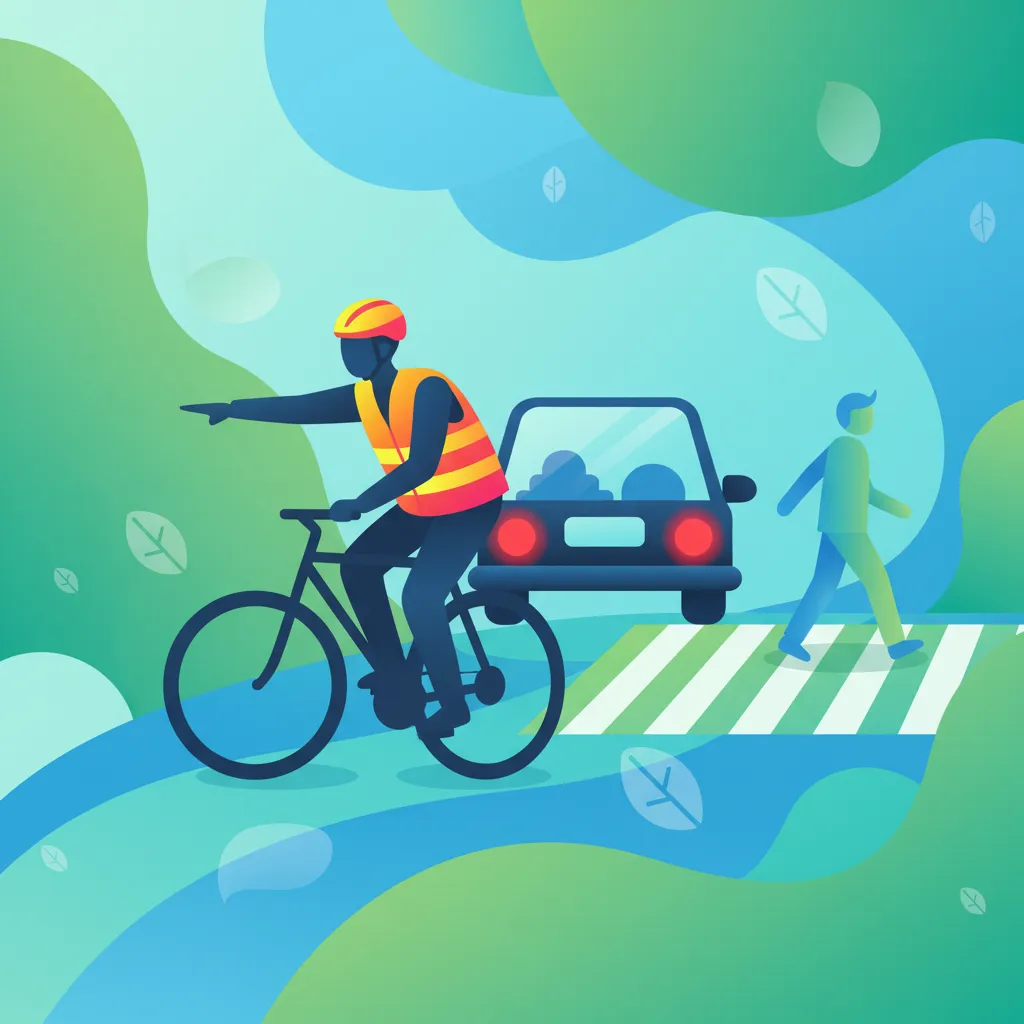
This lesson teaches you how to make an accident scene as safe as possible for yourself, any other involved parties, and approaching traffic. You will learn the correct use of hazard lights, the placement of warning triangles, and the importance of wearing a high-visibility vest. The content also covers how to identify and manage immediate post-crash hazards, such as spilled fuel or unstable vehicles, to prevent the situation from worsening.

This lesson prepares you for the specific challenges of riding on rural roads in Sweden. You will learn how to read the road ahead for changes in surface quality, approach blind corners safely, and adjust your speed for narrow lanes with no shoulder. The content also covers how to anticipate and safely interact with slow-moving agricultural vehicles and the potential for wild animals on the road, ensuring you are prepared for the unpredictable nature of country riding.

This lesson details the technique for performing a quick, decisive swerve to avoid an obstacle in your path. You will learn the correct positive counter-steering inputs required to make the motorcycle change direction rapidly while remaining stable. The lesson also addresses the dangerous phenomenon of 'target fixation' and teaches you to look where you want to go, a critical mental skill for successful evasive maneuvers.

This lesson teaches the physical skill of applying maximum braking force while maintaining control of the motorcycle. You will learn the technique of progressive braking to avoid locking the wheels and how to react if a skid does occur. Understanding how to manage both front and rear wheel skids and how an ABS system assists in these situations gives you the best possible chance of stopping safely and quickly in an emergency.
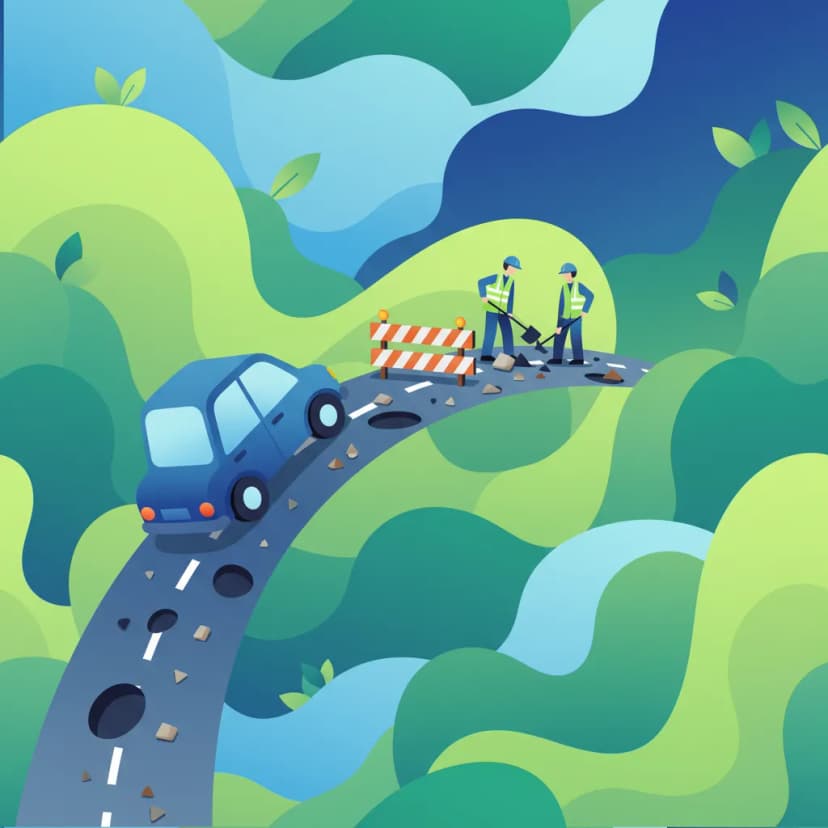
This lesson provides practical techniques for dealing with unavoidable road surface hazards. You will learn how to approach and cross obstacles like potholes, manhole covers, and patches of debris with minimal disruption to the motorcycle's stability. The content covers adjusting your speed, choosing the best line, and using your body to absorb impacts, helping you navigate the imperfections of real-world roads safely.

This lesson focuses on the cognitive side of handling emergencies: seeing the threat early and making the right decision instantly. You will learn to analyze a developing hazard and quickly determine the best course of action, whether it's maximum braking, an evasive swerve, or a combination of both. This mental training is just as important as the physical skill, as the correct initial decision is the key to a successful outcome.
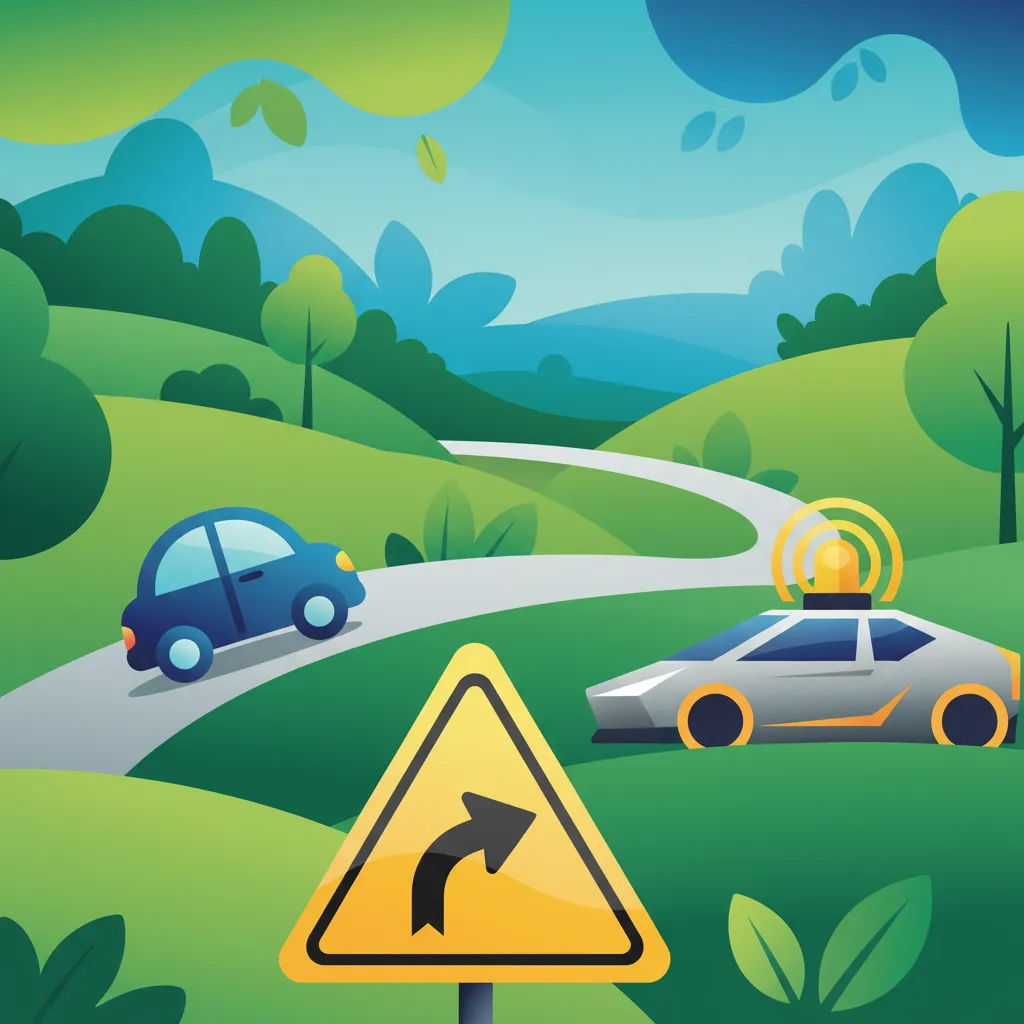
This lesson focuses on Swedish warning signs designed to alert drivers to potential dangers. You will study signs indicating sharp bends, slippery surfaces, animal crossings, and temporary hazards like road construction. Correctly interpreting these signs allows a motorcyclist to proactively adjust speed, lane position, and readiness to react, which is essential for maintaining control and safety, especially in adverse weather or on unfamiliar roads.
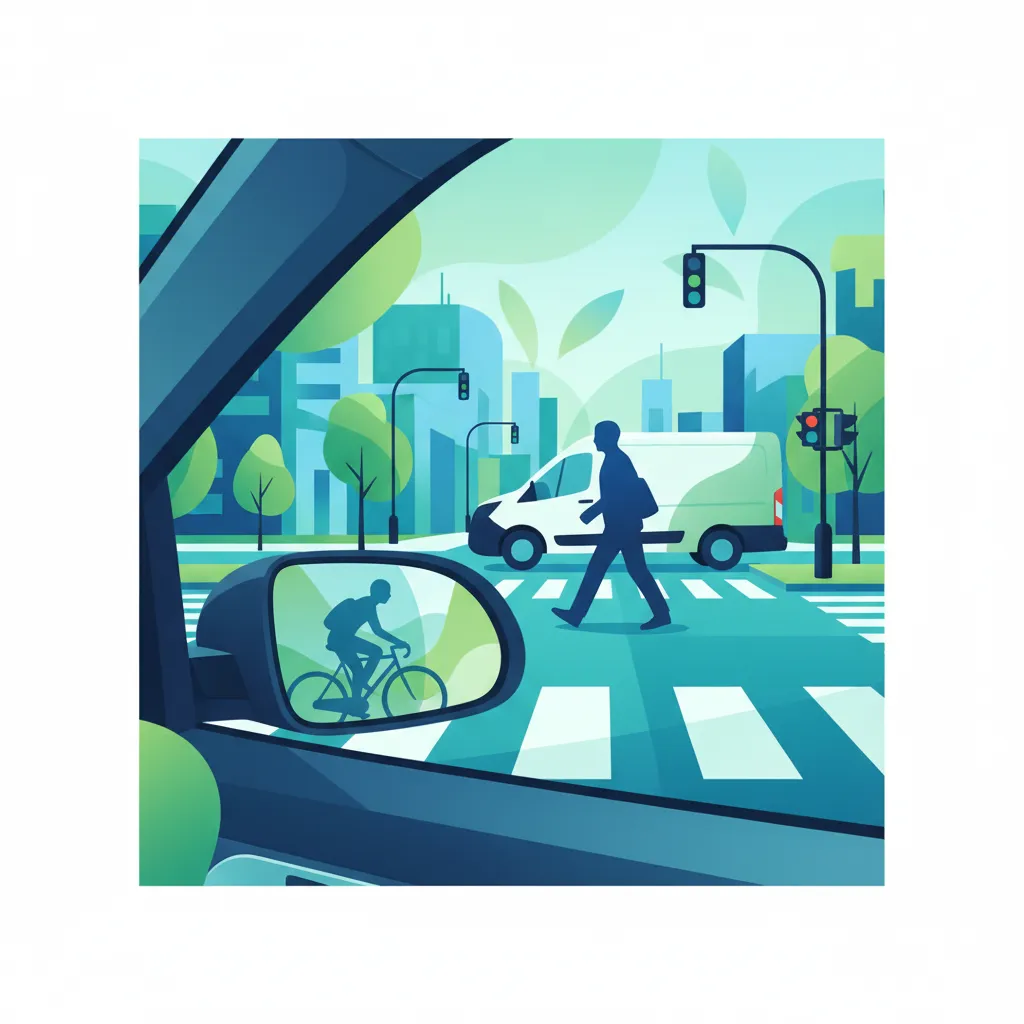
This lesson provides critical strategies for dealing with one of the biggest dangers in traffic: blind spots. You will learn the importance of the shoulder check and how to position yourself on the road to be more visible to other drivers. The lesson also trains you to scan the road surface ahead for hidden hazards like potholes, gravel, or oil spills that can pose a significant threat to a motorcycle's stability, teaching you to see and avoid them in time.
Develop a heightened awareness of potential hazards in different Swedish riding environments. This lesson focuses on identifying risks unique to urban traffic, rural roads, and motorways, linking them to proactive defensive riding and escape path planning. Understand how road conditions and traffic interactions create specific dangers.
This lesson teaches you how to analyze and assess risk when sharing the road with a variety of users, from large trucks to cyclists and pedestrians. You will learn to recognize common patterns of behavior and potential conflict points, allowing you to anticipate the actions of others before they create a dangerous situation. Developing this predictive mindset is a cornerstone of defensive riding and is key to staying safe in busy, complex traffic environments.
This lesson prepares you for the specific challenges of riding on rural roads in Sweden. You will learn how to read the road ahead for changes in surface quality, approach blind corners safely, and adjust your speed for narrow lanes with no shoulder. The content also covers how to anticipate and safely interact with slow-moving agricultural vehicles and the potential for wild animals on the road, ensuring you are prepared for the unpredictable nature of country riding.

This lesson teaches the crucial skill of adapting your speed to the dynamic and often congested conditions of urban riding. You will learn to modulate your speed smoothly in response to traffic flow, pedestrian activity, and complex intersections to maintain safety and control. Techniques covered include using engine braking effectively, anticipating the actions of other road users, and selecting a speed that maximizes your reaction time in a high-density environment.
This lesson provides critical strategies for dealing with one of the biggest dangers in traffic: blind spots. You will learn the importance of the shoulder check and how to position yourself on the road to be more visible to other drivers. The lesson also trains you to scan the road surface ahead for hidden hazards like potholes, gravel, or oil spills that can pose a significant threat to a motorcycle's stability, teaching you to see and avoid them in time.
This lesson teaches you how to make an accident scene as safe as possible for yourself, any other involved parties, and approaching traffic. You will learn the correct use of hazard lights, the placement of warning triangles, and the importance of wearing a high-visibility vest. The content also covers how to identify and manage immediate post-crash hazards, such as spilled fuel or unstable vehicles, to prevent the situation from worsening.
This lesson focuses on Swedish warning signs designed to alert drivers to potential dangers. You will study signs indicating sharp bends, slippery surfaces, animal crossings, and temporary hazards like road construction. Correctly interpreting these signs allows a motorcyclist to proactively adjust speed, lane position, and readiness to react, which is essential for maintaining control and safety, especially in adverse weather or on unfamiliar roads.
This lesson focuses on the specific techniques required for riding in busy city and town environments. You will learn how to maintain correct lane positioning amidst dense traffic, navigate complex intersections with multiple signals, and manage the motorcycle at low speeds in stop-and-go conditions. Emphasis is placed on heightened awareness of pedestrians, cyclists, and vehicles making sudden maneuvers, which are common hazards in urban settings.
This lesson provides practical techniques for dealing with unavoidable road surface hazards. You will learn how to approach and cross obstacles like potholes, manhole covers, and patches of debris with minimal disruption to the motorcycle's stability. The content covers adjusting your speed, choosing the best line, and using your body to absorb impacts, helping you navigate the imperfections of real-world roads safely.
This lesson provides detailed guidance on navigating complex traffic points such as signalized intersections, multi-lane roundabouts, and pedestrian crossings. You will learn the correct procedures for entering and exiting roundabouts, the specific rules for yielding to pedestrians and cyclists at designated crossings, and how to interpret complex traffic light signals. These skills are vital for safe urban and suburban riding, where interaction with vulnerable road users is frequent.

This lesson focuses on the unique demands of managing speed in high-speed environments like motorways. You will learn techniques for maintaining a steady, appropriate speed that matches the flow of traffic, how to perform smooth overtakes, and the importance of increasing your following distance. It also covers physical factors such as managing wind blast and maintaining stability when riding near large trucks, ensuring a safe and controlled high-speed riding experience.
Find clear answers to common questions learners have about Defensive Riding and Escape Path Planning. Learn how the lesson is structured, which driving theory objectives it supports, and how it fits into the overall learning path of units and curriculum progression in Sweden. These explanations help you understand key concepts, lesson flow, and exam focused study goals.
An escape path is an open space or route available for a motorcyclist to move into if a hazard suddenly appears. This could be an adjacent lane, a shoulder, or even a clear area to the side of the road. The goal is to constantly identify and maintain these paths as part of defensive riding.
Following the rules is essential, but defensive riding goes a step further. It involves anticipating potential rule-breaking by others, assessing risks proactively, and positioning yourself to minimize danger and maximize your options, even if others make mistakes. It's about being prepared for the unexpected.
Your position within your lane, and in relation to other vehicles, directly impacts your ability to see and be seen, and crucially, your access to an escape path. Riding towards the side of your lane can provide a better view of potential hazards and a quicker route to safety if needed.
Mentally review traffic situations you encounter or see in videos. Ask yourself: 'If that car suddenly brakes, swerves, or pulls out, where could I safely go?' This constant mental exercise helps build the habit for when you're actually riding.
Yes, concepts related to hazard perception, defensive riding, and risk assessment are core components of the Swedish motorcycle theory test. Questions will often present scenarios where you need to identify risks and choose the safest course of action, including planning for escape.