
This lesson covers the critical maneuvers of merging and changing lanes. You will learn the correct technique for using an acceleration lane to match the speed of motorway traffic before merging smoothly and safely. The lesson emphasizes the importance of checking mirrors and the blind spot, signaling in good time, and applying the 'zipper principle' (dragkedjeprincipen) where lanes merge to ensure efficient and courteous traffic flow.

Prepare for your Swedish Category B driving theory test with our complete online curriculum. This course covers everything from the Trafikförordning, including road signs, priority rules, vehicle safety, and environmental considerations. Learn to interpret traffic situations, understand risk management, and master the knowledge required to become a confident, safe, and responsible driver on Swedish roads.
The Merging and Lane Changes (Omkörning) lesson explains one of the most important subjects in the Priority Rules and Intersections unit of the Swedish Driving Theory B curriculum. It focuses on essential exam content that every learner in Sweden needs for the Swedish driving theory exam. Through clear explanations, practical examples, and real traffic situations, this lesson helps you understand how the rules work in practice and strengthens your overall exam preparation.
Upon completing this lesson, you will be equipped to confidently and safely merge onto motorways and change lanes in various traffic conditions. You’ll understand precisely how to use acceleration lanes to match the speed of existing traffic, know when and how to check your blind spots, and execute lane changes with proper signalling and timing. This knowledge is essential for preventing common accidents, avoiding unnecessary traffic disruptions, and successfully answering scenario-based questions on merging and lane changes in your Swedish Category B theory test. You’ll feel more prepared for the practical challenges of motorway driving and gain a deeper appreciation for cooperative traffic behaviour, such as the zipper principle.
This lesson directly addresses common exam questions focusing on safe merging techniques, understanding acceleration lanes, and the correct sequence of actions for changing lanes. By mastering these skills, you will not only improve your chances of passing the theory test but also build the foundation for safe and responsible driving habits on Sweden's diverse road network.

This lesson is ideal for Category B learners who find merging onto busy roads or changing lanes confusing or intimidating. It's particularly helpful for those preparing for the Swedish theory test who want to ensure they understand the specific rules and safe practices required for motorways and multi-lane roads.
View all lesson topicsFind answers to common questions about the Merging and Lane Changes (Omkörning) lesson, including how it connects to the Priority Rules and Intersections unit and the full Swedish Driving Theory B curriculum. Learn how long the lesson takes, what topics it covers, and how it supports your preparation for the driving theory exam in Sweden.

The Merging and Lane Changes (Omkörning) lesson is designed to make complex driving theory topics easier to understand. Content is written in a clear and practical way, aligned with exam expectations in Sweden, and supported by examples that reflect real traffic situations. Whether you are reviewing or starting from scratch, this lesson helps you study efficiently and make steady progress inside the Swedish Driving Theory B curriculum.
Explore additional units that make up the complete Swedish Driving Theory B curriculum. Each unit focuses on important driving theory subjects, helping learners in Sweden build strong exam knowledge and improve understanding of rules, signs, and traffic behaviour.
Learn to recognise and understand all Swedish road signs, traffic signals, and road markings. This essential knowledge is key to passing your theory test and driving safely in Sweden.
5 lessons
Master Swedish priority rules like Högerregeln, väjningsplikt, and stopplikt. Learn to navigate intersections and roundabouts confidently for your theory test and safe driving.
5 lessons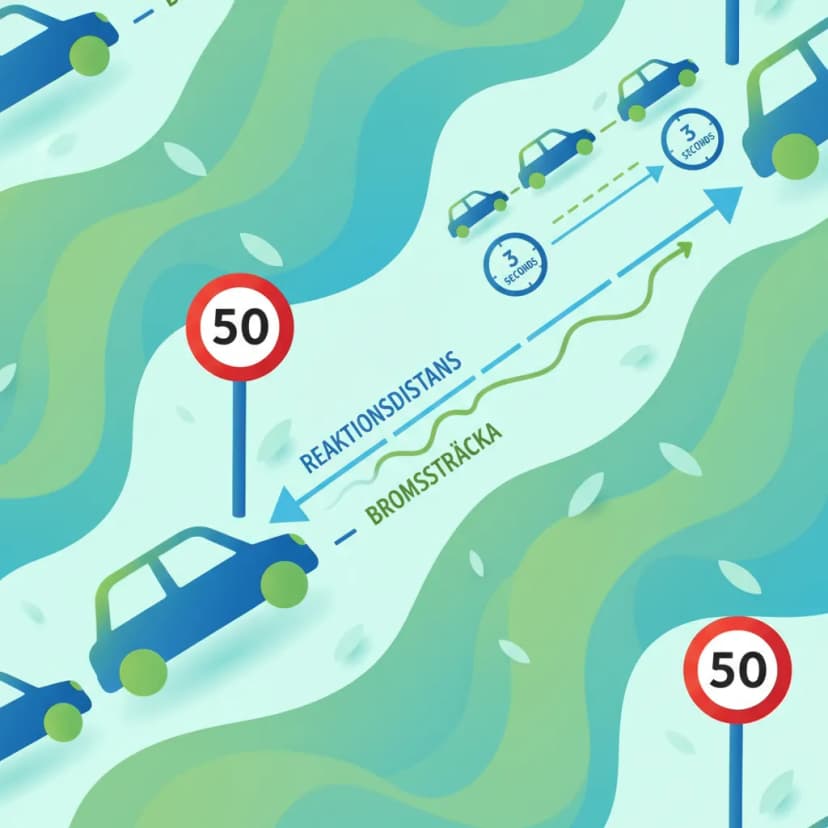
Master Swedish speed limits and safe following distances. Learn how to calculate stopping distances and apply the three-second rule to prevent accidents and pass your theory test.
5 lessons
Master essential vehicle control and maneuvering skills, including steering, braking, parking, and reversing. Crucial for safe driving and passing your Swedish theory test.
5 lessons
Learn to drive safely and adapt your skills to Swedish city streets, rural roads, and motorways. Master unique hazards and rules for any environment and ace your theory exam.
5 lessons
Master safe driving in Swedish winters and adverse weather. Learn about winter tires, black ice, skids, and visibility challenges to pass your theory test and drive safely.
5 lessons
Learn Eco-Driving (sparsam körning) for economical and environmentally friendly driving in Sweden. Master fuel-saving techniques and understand Swedish emission rules to pass your theory test.
5 lessons
Learn about essential vehicle safety systems (ABS, ESP), dashboard warning lights, and crucial pre-drive checks to ensure your car is safe and to prepare for your Swedish driving theory exam.
5 lessons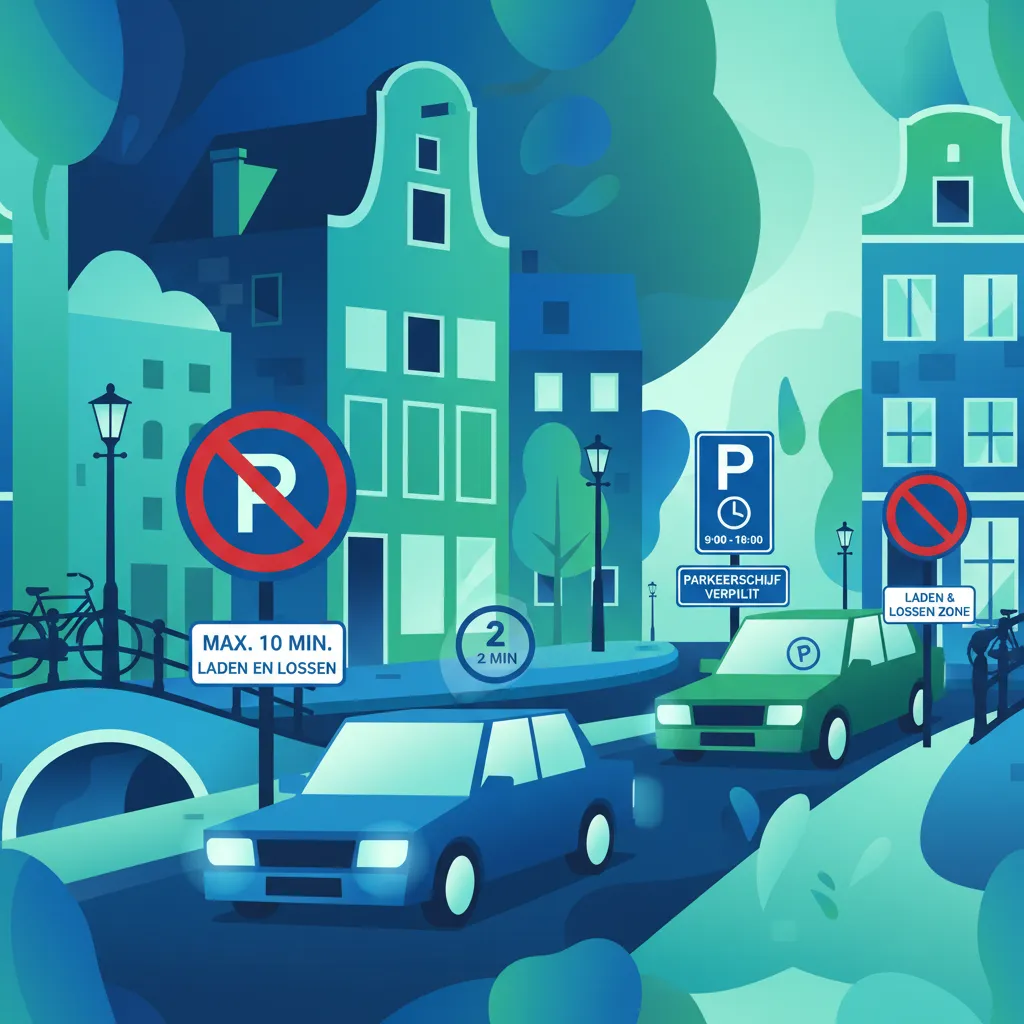
Master Swedish parking, stopping, and loading zone rules. Learn to interpret signs, understand legal differences between stopping and parking, and avoid fines on your theory test and beyond.
5 lessons
Learn crucial rules and develop heightened awareness for safely interacting with pedestrians, cyclists, and other vulnerable road users in Sweden. Essential for your B licence theory exam and safe driving.
5 lessons
Learn about Sweden's strict laws on alcohol and drug impairment (rattfylleri), the dangers of driving while fatigued, and medical fitness requirements. Crucial for passing your theory test and driving safely.
5 lessons
Learn critical procedures for traffic accidents, breakdowns, and other emergencies. Essential knowledge for driver safety and passing your Swedish theory test.
5 lessonsBegin studying the Merging and Lane Changes (Omkörning) lesson and keep advancing through the Swedish Driving Theory B curriculum. With clear explanations, structured topics, and practical examples, this lesson helps you learn confidently and prepare more effectively for the Swedish driving theory exam in Sweden.