
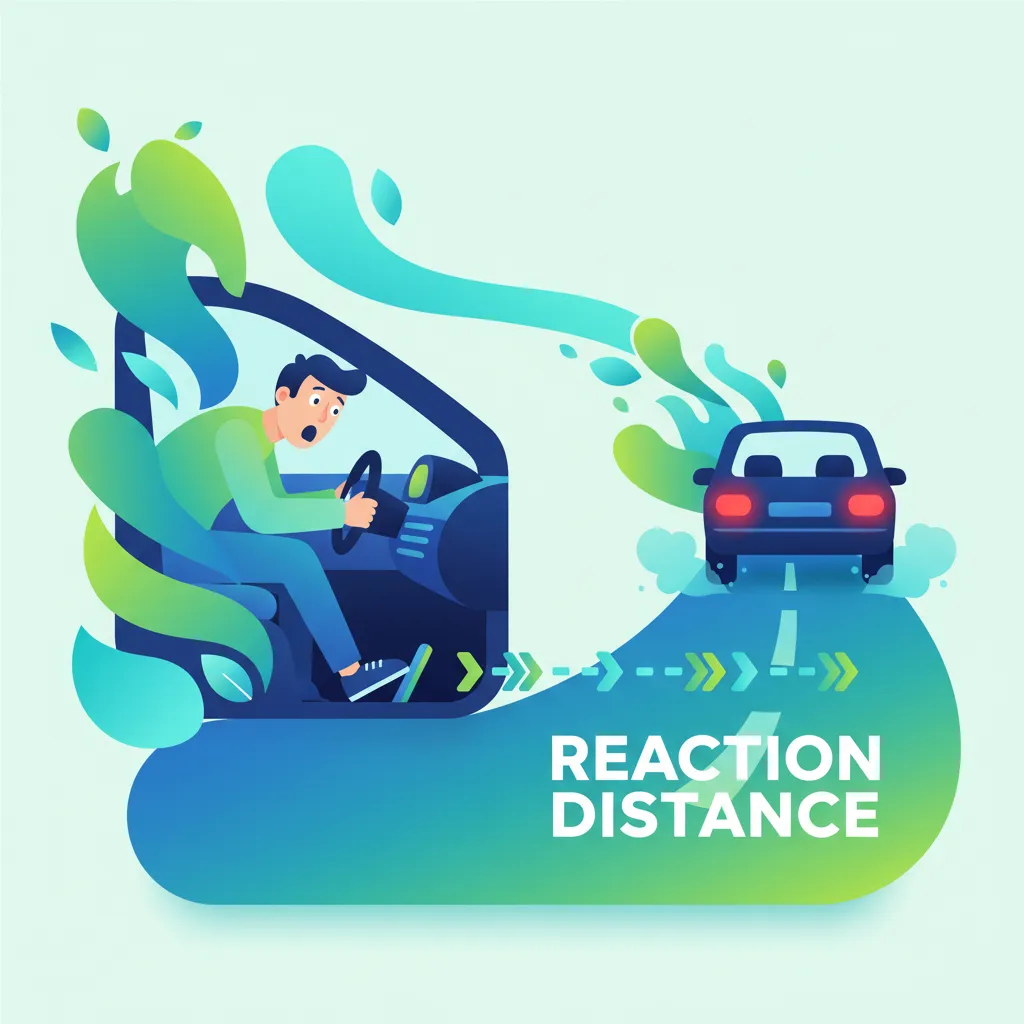
This lesson breaks down the components of the total stopping distance: reaction distance and braking distance. You will learn how your physical and mental state affects reaction time, and how speed, tire condition, and road surface (e.g., ice, rain) influence the distance required to brake to a complete stop. Understanding these physical principles is essential for making safe decisions about speed and following distance in all conditions.

Prepare for your Swedish Category B driving theory test with our complete online curriculum. This course covers everything from the Trafikförordning, including road signs, priority rules, vehicle safety, and environmental considerations. Learn to interpret traffic situations, understand risk management, and master the knowledge required to become a confident, safe, and responsible driver on Swedish roads.
The Reaction Time and Braking Distance (Reaktionstid) lesson explains one of the most important subjects in the Speed Limits and Distance Management unit of the Swedish Driving Theory B curriculum. It focuses on essential exam content that every learner in Sweden needs for the Swedish driving theory exam. Through clear explanations, practical examples, and real traffic situations, this lesson helps you understand how the rules work in practice and strengthens your overall exam preparation.
After completing this lesson, you will have a clear, practical understanding of total stopping distance. You'll be able to identify how factors like your speed, alertness, the road surface condition, and even tire wear directly influence the distance your vehicle needs to come to a complete halt. This knowledge is directly applicable to answering questions on the Swedish theory test that assess your comprehension of safe driving margins. More importantly, you will gain the confidence to consistently maintain appropriate following distances in real-world driving scenarios, significantly reducing your risk of collision and enhancing your overall safety on Swedish roads.

This lesson is ideal for all learners preparing for the Swedish Category B theory test, especially those who want a clear understanding of the physics behind stopping distances. It's particularly helpful for individuals who struggle with questions about safe following distances or need to grasp how different factors influence their ability to stop quickly.
View all lesson topicsFind answers to common questions about the Reaction Time and Braking Distance (Reaktionstid) lesson, including how it connects to the Speed Limits and Distance Management unit and the full Swedish Driving Theory B curriculum. Learn how long the lesson takes, what topics it covers, and how it supports your preparation for the driving theory exam in Sweden.

The Reaction Time and Braking Distance (Reaktionstid) lesson is designed to make complex driving theory topics easier to understand. Content is written in a clear and practical way, aligned with exam expectations in Sweden, and supported by examples that reflect real traffic situations. Whether you are reviewing or starting from scratch, this lesson helps you study efficiently and make steady progress inside the Swedish Driving Theory B curriculum.
Explore additional units that make up the complete Swedish Driving Theory B curriculum. Each unit focuses on important driving theory subjects, helping learners in Sweden build strong exam knowledge and improve understanding of rules, signs, and traffic behaviour.

Learn to recognise and understand all Swedish road signs, traffic signals, and road markings. This essential knowledge is key to passing your theory test and driving safely in Sweden.
5 lessons
Master Swedish priority rules like Högerregeln, väjningsplikt, and stopplikt. Learn to navigate intersections and roundabouts confidently for your theory test and safe driving.
5 lessons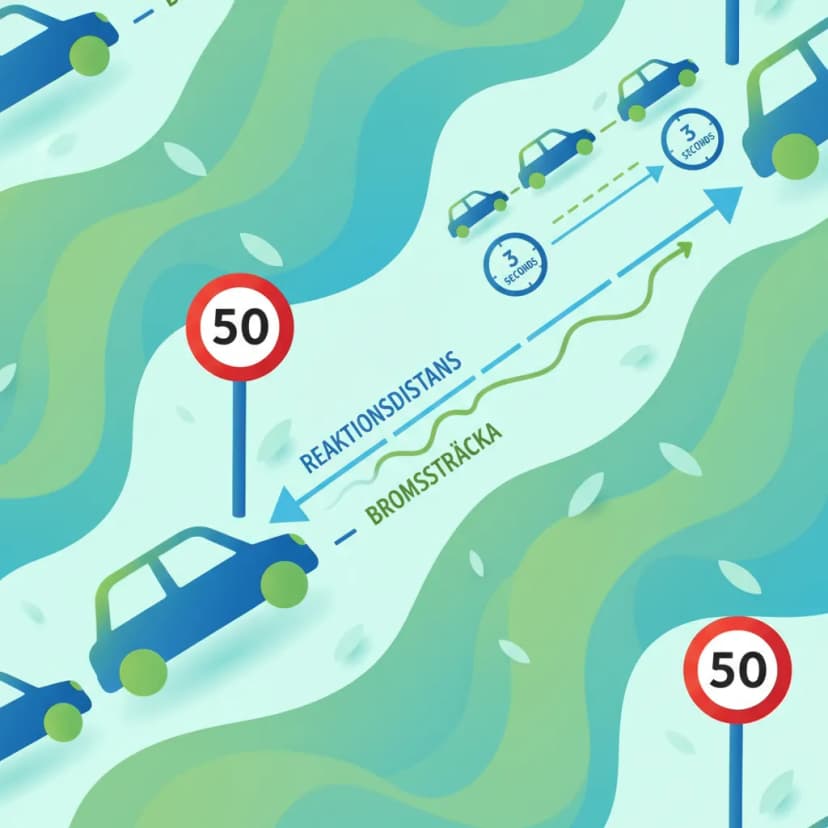
Master Swedish speed limits and safe following distances. Learn how to calculate stopping distances and apply the three-second rule to prevent accidents and pass your theory test.
5 lessons
Master essential vehicle control and maneuvering skills, including steering, braking, parking, and reversing. Crucial for safe driving and passing your Swedish theory test.
5 lessons
Learn to drive safely and adapt your skills to Swedish city streets, rural roads, and motorways. Master unique hazards and rules for any environment and ace your theory exam.
5 lessons
Master safe driving in Swedish winters and adverse weather. Learn about winter tires, black ice, skids, and visibility challenges to pass your theory test and drive safely.
5 lessons
Learn Eco-Driving (sparsam körning) for economical and environmentally friendly driving in Sweden. Master fuel-saving techniques and understand Swedish emission rules to pass your theory test.
5 lessons
Learn about essential vehicle safety systems (ABS, ESP), dashboard warning lights, and crucial pre-drive checks to ensure your car is safe and to prepare for your Swedish driving theory exam.
5 lessons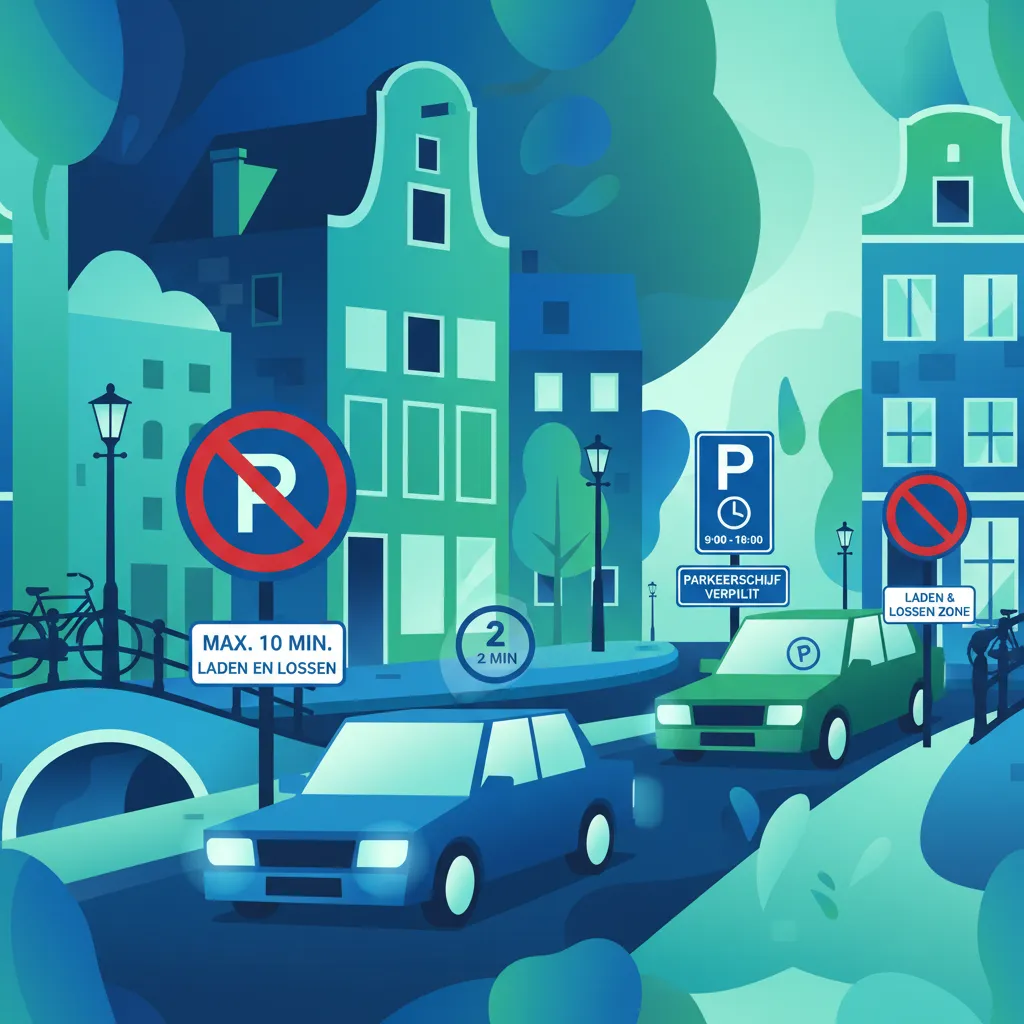
Master Swedish parking, stopping, and loading zone rules. Learn to interpret signs, understand legal differences between stopping and parking, and avoid fines on your theory test and beyond.
5 lessons
Learn crucial rules and develop heightened awareness for safely interacting with pedestrians, cyclists, and other vulnerable road users in Sweden. Essential for your B licence theory exam and safe driving.
5 lessons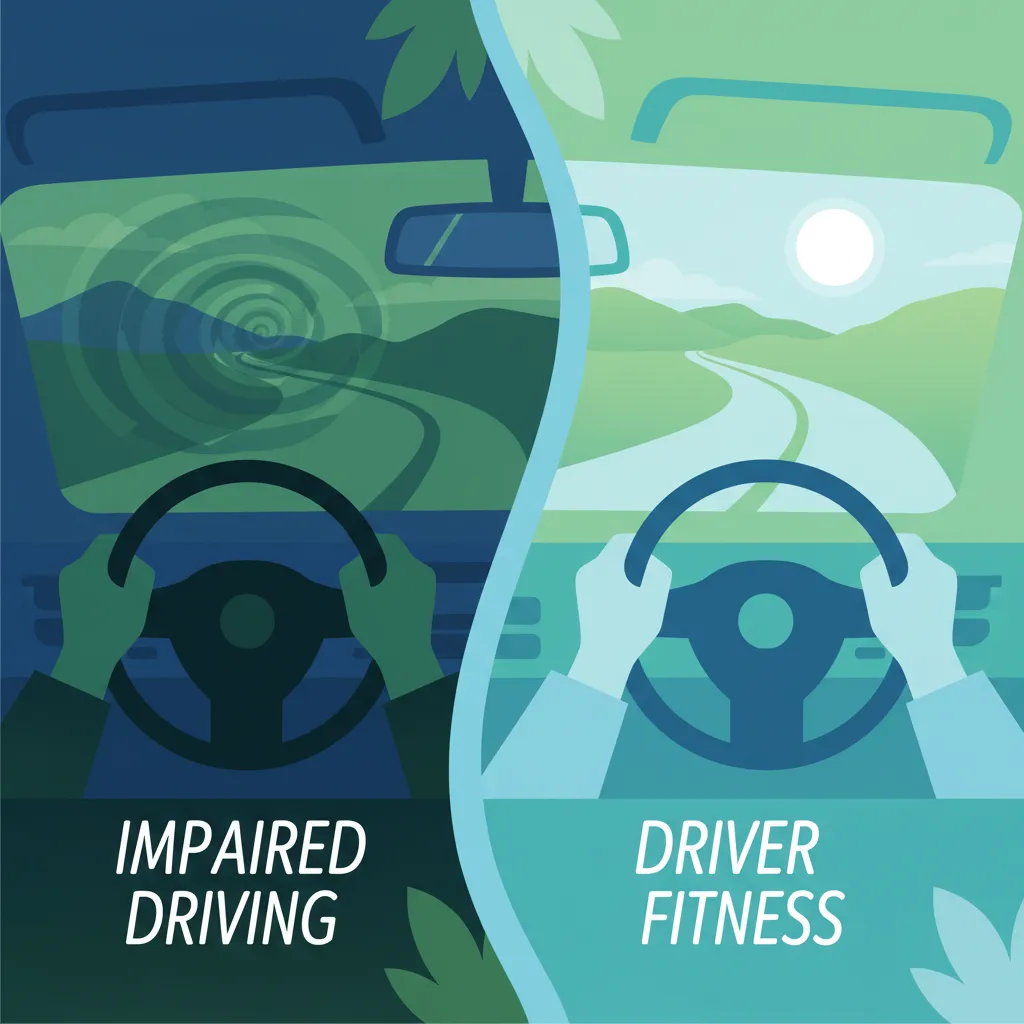
Learn about Sweden's strict laws on alcohol and drug impairment (rattfylleri), the dangers of driving while fatigued, and medical fitness requirements. Crucial for passing your theory test and driving safely.
5 lessons
Learn critical procedures for traffic accidents, breakdowns, and other emergencies. Essential knowledge for driver safety and passing your Swedish theory test.
5 lessonsBegin studying the Reaction Time and Braking Distance (Reaktionstid) lesson and keep advancing through the Swedish Driving Theory B curriculum. With clear explanations, structured topics, and practical examples, this lesson helps you learn confidently and prepare more effectively for the Swedish driving theory exam in Sweden.