

This lesson addresses the challenge of riding in windy conditions, which can seriously affect the stability of a lightweight moped. It explains how to anticipate gusts, especially when passing large vehicles or riding in exposed areas. Techniques such as adjusting body position and applying gentle counter-steering pressure to maintain a steady line are covered.

Prepare for your Swedish Category AM (moped) driving license with our comprehensive theory course. Aligned with the latest Transportstyrelsen and Trafikverket guidelines, this program covers everything from traffic regulations and road sign interpretation to vehicle control and hazard awareness. Learn the specific rules for moped riders in Sweden, including lane usage, priority rules, and safety equipment, ensuring you have the knowledge to ride confidently and pass your exam.
The Wind Effects on Two-Wheel Stability lesson explains one of the most important subjects in the Riding in Adverse Weather and Light Conditions unit of the Swedish Moped Theory AM curriculum. It focuses on essential exam content that every learner in Sweden needs for the Swedish driving theory exam. Through clear explanations, practical examples, and real traffic situations, this lesson helps you understand how the rules work in practice and strengthens your overall exam preparation.
After completing this lesson, you will possess the knowledge to safely navigate Swedish roads when faced with windy conditions. You'll be able to identify situations where wind poses a significant risk, such as when riding on open stretches, bridges, or when overtaking large vehicles. You will understand how to subtly adjust your body position to create a lower centre of gravity and greater stability, and how to make small, deliberate steering corrections to counteract unexpected gusts. This preparedness will not only help you answer relevant questions on the AM moped theory exam with greater accuracy but also ensure you can ride more defensively and confidently in challenging weather.
Successfully applying these principles means you can anticipate how wind might push your moped sideways or affect its balance, allowing you to make timely corrections before instability becomes dangerous. You'll be better equipped to maintain your lane position and avoid abrupt reactions that could lead to skidding or loss of control, ultimately contributing to safer journeys and a better understanding of Sweden's road environment.

This lesson is ideal for AM licence learners in Sweden who may be concerned about riding in windy conditions. It's particularly helpful for those who find questions about adverse weather challenging on the theory exam or want to build confidence in handling their moped outside of ideal conditions.
View all lesson topicsFind answers to common questions about the Wind Effects on Two-Wheel Stability lesson, including how it connects to the Riding in Adverse Weather and Light Conditions unit and the full Swedish Moped Theory AM curriculum. Learn how long the lesson takes, what topics it covers, and how it supports your preparation for the driving theory exam in Sweden.

The Wind Effects on Two-Wheel Stability lesson is designed to make complex driving theory topics easier to understand. Content is written in a clear and practical way, aligned with exam expectations in Sweden, and supported by examples that reflect real traffic situations. Whether you are reviewing or starting from scratch, this lesson helps you study efficiently and make steady progress inside the Swedish Moped Theory AM curriculum.
Explore additional units that make up the complete Swedish Moped Theory AM curriculum. Each unit focuses on important driving theory subjects, helping learners in Sweden build strong exam knowledge and improve understanding of rules, signs, and traffic behaviour.
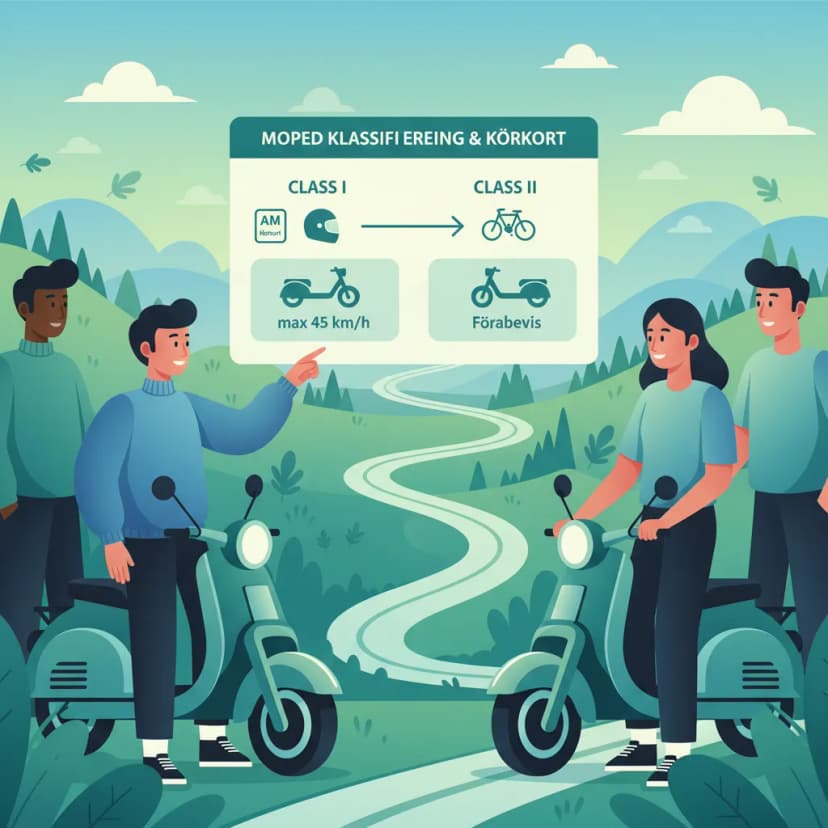
This unit introduces the essential legal requirements, vehicle types, and application steps for obtaining a Swedish Category AM moped license. Prepare for your theory exam by understanding the basics of moped classification and the licensing process.
5 lessons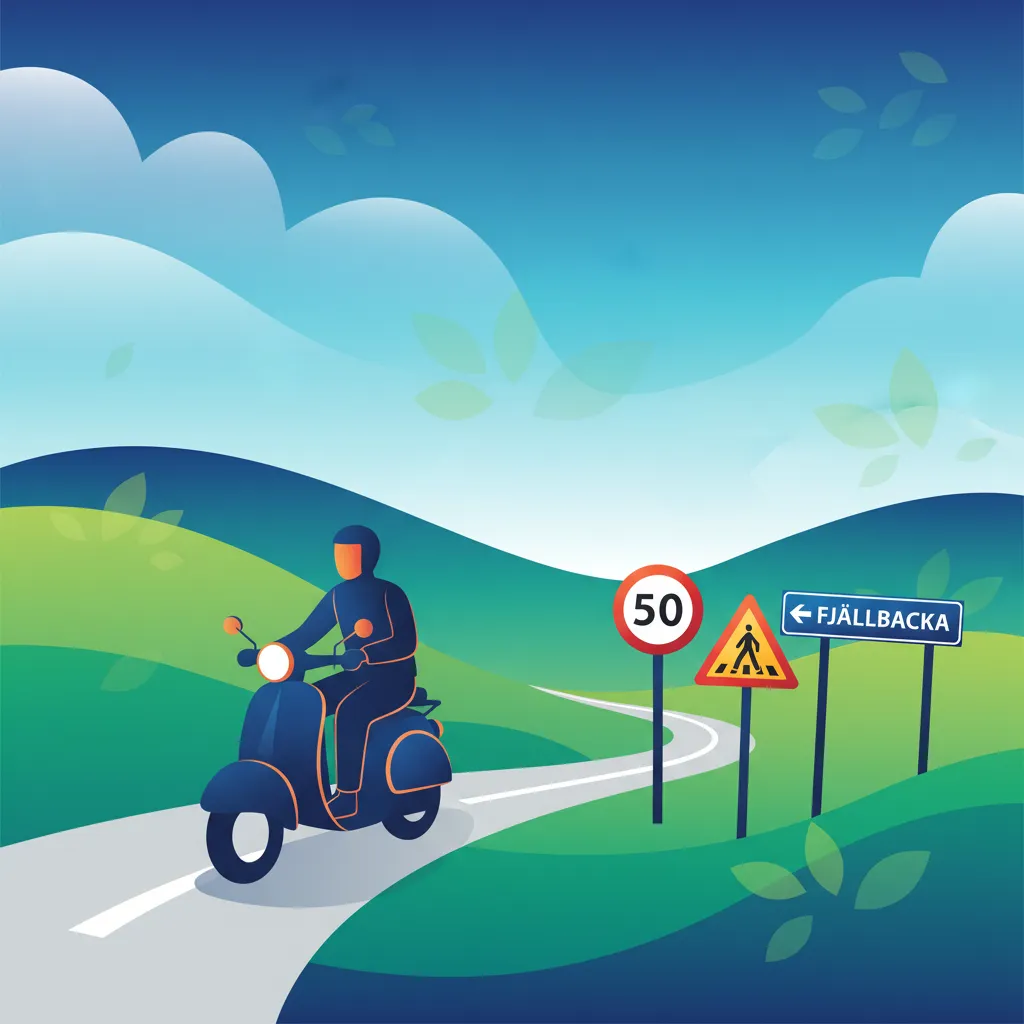
Learn to decipher all Swedish road signs—regulatory, warning, and informational—essential for moped riders. Master sign meanings to ensure safe riding and pass your AM theory exam.
5 lessons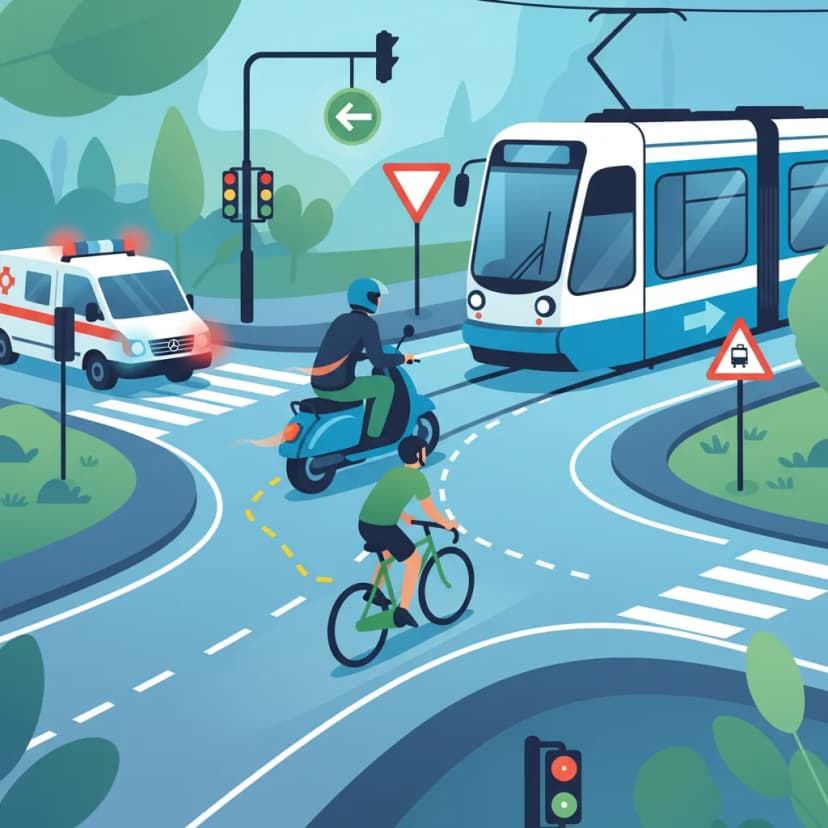
Master Sweden's crucial right-of-way rules (Väjningsregler) for your AM moped theory test. Learn to navigate intersections, roundabouts, and yielding situations to ride safely and pass your exam.
5 lessons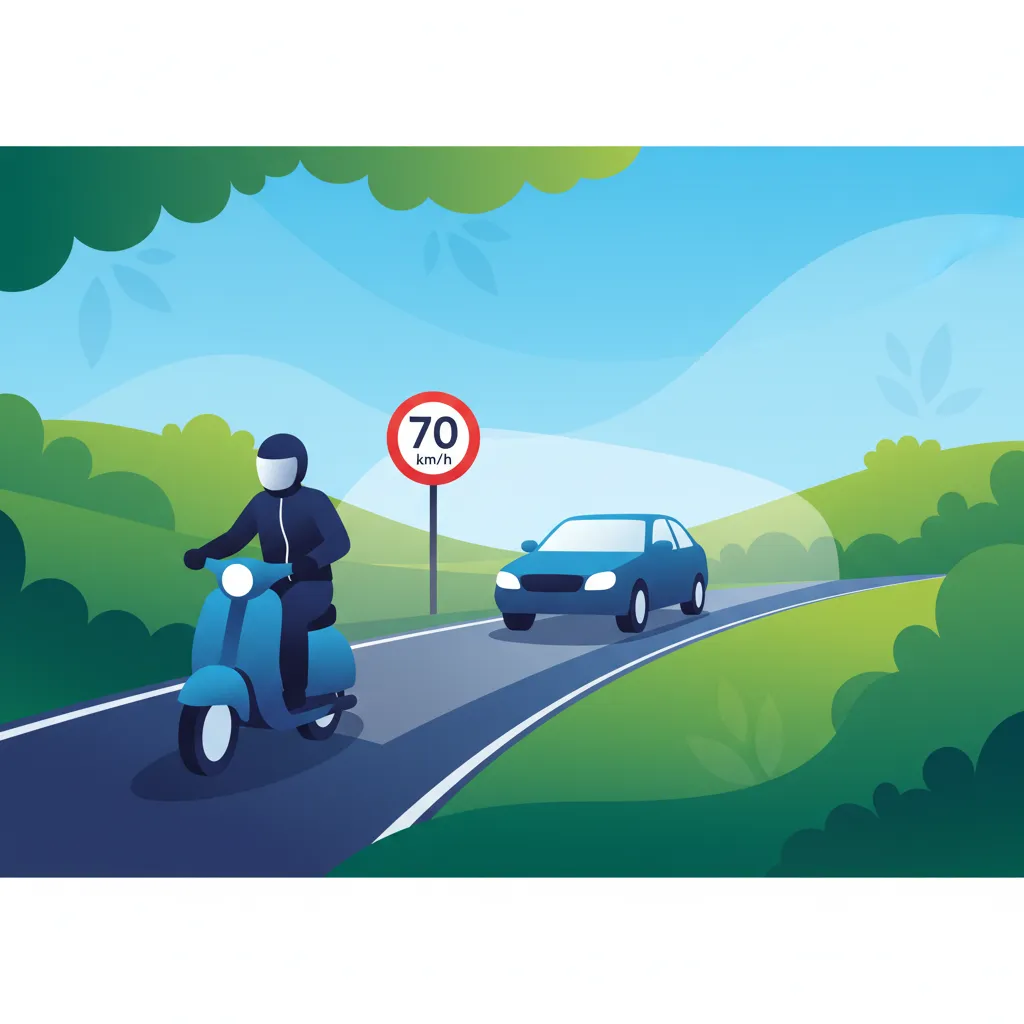
Master Swedish speed limits and safe following distances for your moped theory test. Learn to calculate stopping distances and use the 3-second rule to ride safely and pass your exam.
5 lessons
Master essential moped handling for your AM license! Learn balance, steering, throttle, and brake control for safe cornering, stops, and slow-speed maneuvers. Crucial for theory and practical success.
5 lessons
Learn to position your AM moped effectively in your lane, use mirrors and head checks correctly, and ensure you are seen by others using proper lighting and signals. Essential for safe riding in Sweden.
5 lessons
Learn to safely handle your moped in Sweden's challenging weather and light conditions, including rain, ice, fog, and darkness. Essential for passing your AM theory test and riding safely year-round.
5 lessons
Learn the crucial Swedish rules and safety benefits of wearing helmets and protective gear on your moped. Essential knowledge for passing your AM theory test and riding safely.
5 lessons
Learn to safely interact with cars, cyclists, pedestrians, and more on Swedish roads. Essential for your AM moped theory exam and confident riding.
5 lessons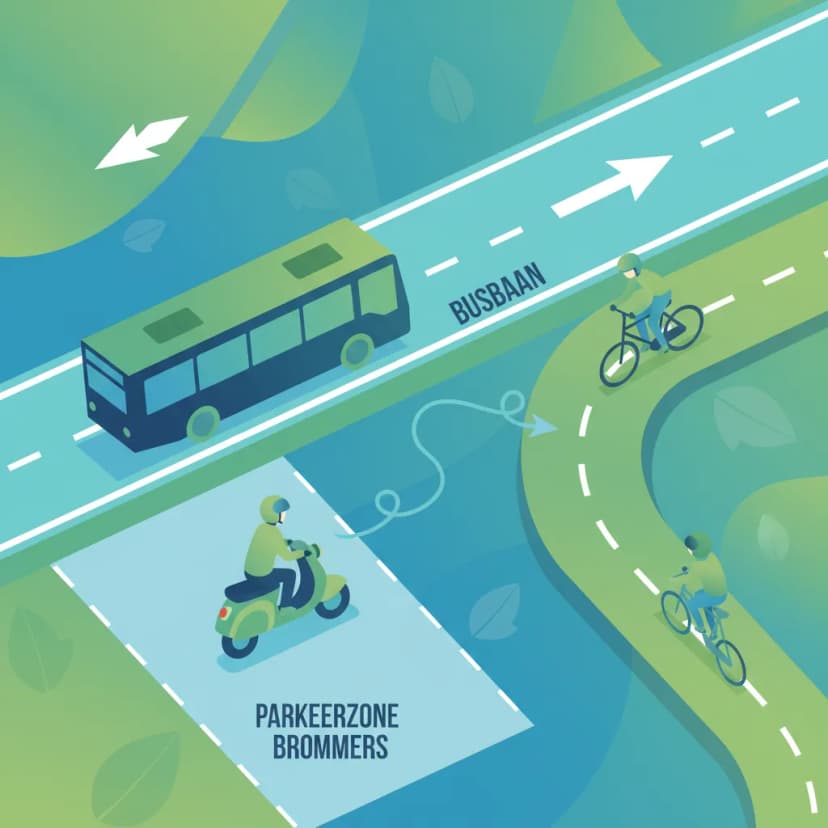
Understand Swedish road markings, special lanes (bus/cycle), and specific moped parking rules. Essential for safe riding and passing your AM theory test.
5 lessons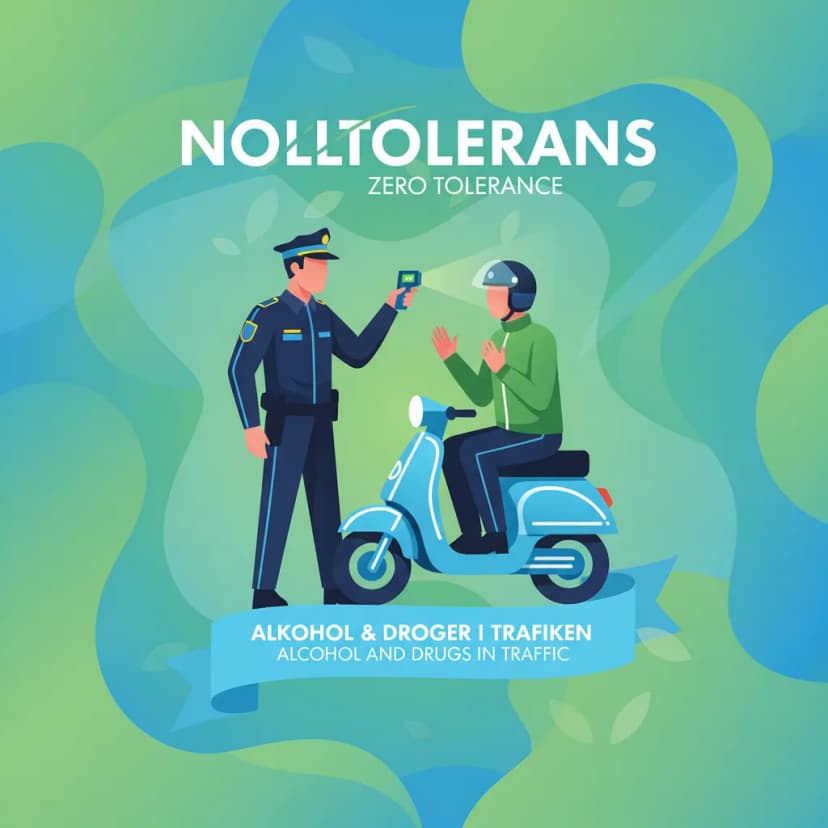
Learn critical legal responsibilities for AM moped riders in Sweden, including zero tolerance for alcohol/drugs, required documentation, insurance, and the demerit points system for safe, lawful riding.
5 lessons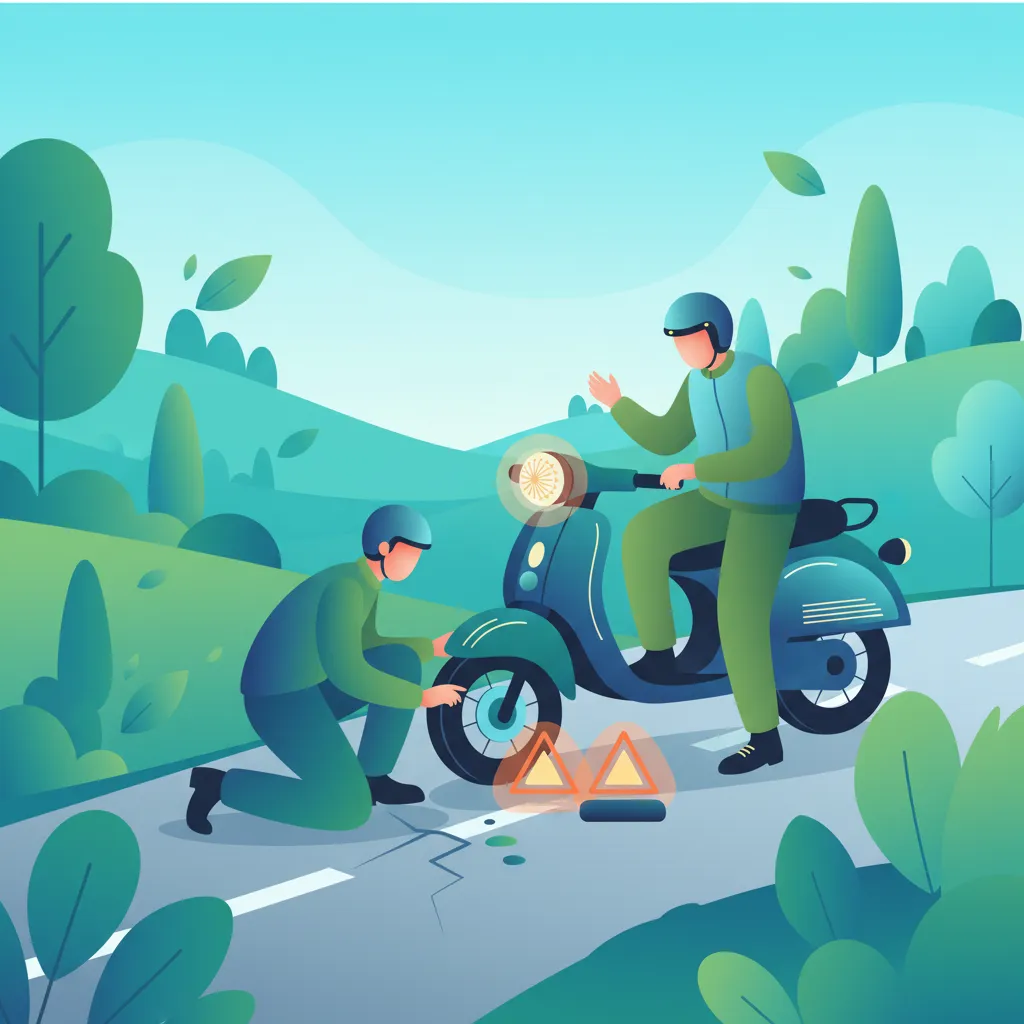
Master accident response, legal reporting (Polisanmälan), and essential moped checks (Däck, Bromsar) for your Swedish AM license theory test. Be prepared for emergencies and ensure vehicle safety.
5 lessonsBegin studying the Wind Effects on Two-Wheel Stability lesson and keep advancing through the Swedish Moped Theory AM curriculum. With clear explanations, structured topics, and practical examples, this lesson helps you learn confidently and prepare more effectively for the Swedish driving theory exam in Sweden.