
Prepare for the unpredictable nature of Swedish roads with this advanced practice set. You'll learn to anticipate and react safely to changing traction, from wet surfaces and slush to hidden ice patches and treacherous road conditions. Essential for passing your official Swedish driving license theory exam and ensuring safety on the road.

Start targeted Swedish driving theory preparation for learners in Sweden. Train with exam style questions, learn core rules, and build the knowledge needed for the official theory test.
Navigate complex scenarios involving varying road grip, from wet roads and aquaplaning risks to unexpected ice patches. This set prepares you to make smart speed decisions before treacherous conditions catch you by surprise, helping you pass the Swedish driving theory exam.
Preview sample questions from the Mixed Traction Speed practice set to see how they help you prepare for the driving theory exam in Sweden.
Learners choose Mixed Traction Speed to improve accuracy and understanding of key exam themes in Sweden. It offers realistic driving theory questions and targeted revision for effective preparation.
Find answers to the most common queries learners have when practising Mixed Traction Speed, including how questions match the official theory exam in Sweden, how scoring works, and how this practice improves exam readiness.
'Förrädiskt väglag' refers to treacherous road conditions where slipperiness isn't immediately obvious, such as patchy ice or black ice. Drivers often underestimate the danger, leading to accidents if they don't adapt their speed.
Always assume that grip can worsen suddenly. Reduce your speed significantly before entering wet or potentially slippery sections, especially in shaded areas or on bridges. Avoid sudden braking or steering inputs.
Aquaplaning occurs when a layer of water builds up between your tires and the road, causing you to lose traction. It's caused by high speed on wet roads and worn tire treads. Prevent it by reducing speed in heavy rain and ensuring your tires have sufficient tread depth (minimum 1.6 mm in Sweden).
Bridges are exposed to cold air from above and below, causing them to freeze faster and stay frozen longer than the surrounding road. Shaded areas, often found in forests or under overpasses, receive less sun and therefore ice up more readily, even when other parts of the road are clear.
When temperatures hover around 0°C, moisture on the road can easily freeze, leading to black ice or 'underkylt regn' (supercooled rain) freezing on impact. This creates extremely slick conditions that are often invisible, making careful speed adaptation crucial.
By completing Mixed Traction Speed, you will gain stronger rule knowledge, faster recognition of signs and situations, better decision making in traffic scenarios, and increased accuracy on exam style questions used in Sweden. These outcomes directly support higher scoring exam performance.
Discover more Swedish driving theory practice sets created for exam preparation in Sweden. Train with realistic questions on traffic rules, road signs, priority situations, and safety topics to build knowledge and pass your theory test with confidence.

Master the Subtle Signs of Slippery Roads and Drive Safely in Sweden.
Master the Art of Safe Driving in Slippery Conditions and Beyond Your Limits.
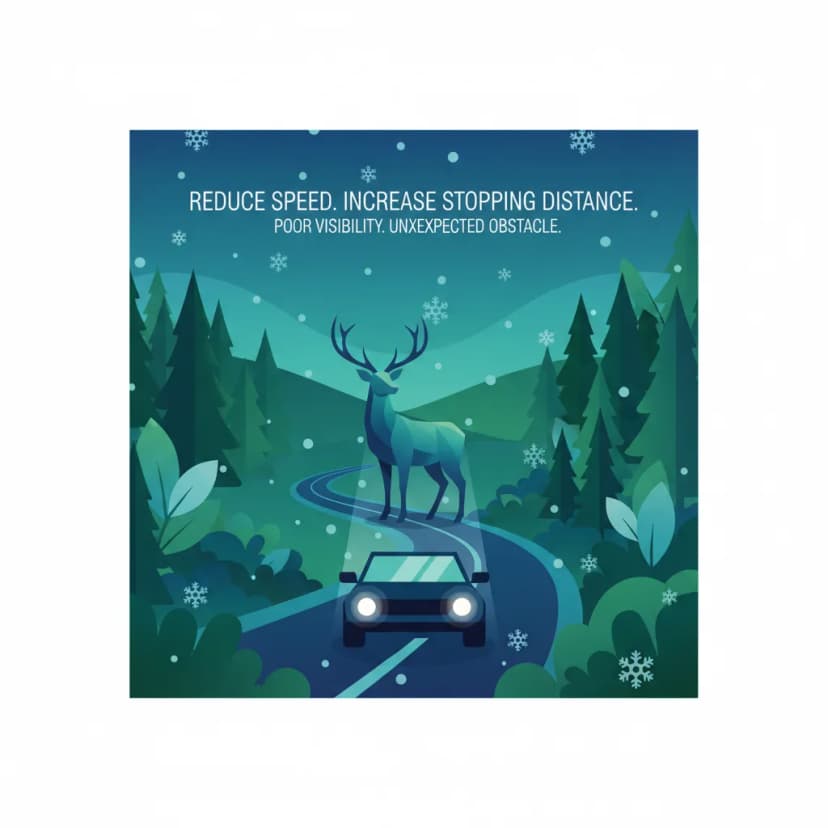
Master the Art of Speed Adaptation and Drive Safely in All Swedish Conditions.

Mastering Safe Stopping: Critical Skills for Swedish Roads

Drive Smarter and Safer: Conquer Slippery Conditions with Expert Techniques.
Master the Risks of Aquaplaning and Wet Weather Driving for Your Swedish Theory Test
Questions in Mixed Traction Speed
Exam focused questionss
Mixed Traction Speed offers quick, focused exam style practice to boost your Swedish knowledge for the driving theory exam in Sweden.
Mixed Traction Speed helps learners in Sweden with clear explanations and targeted Swedish practice to improve essential driving theory topics.
This practice set is ideal for intermediate to advanced learners preparing for the Swedish driving theory exam. If you struggle with anticipating hazardous road conditions or misjudging safe speeds on mixed surfaces, this set will sharpen your decision-making skills and help you avoid common mistakes on unpredictable roads.
Explore more topics for the Swedish driving theory exam in Sweden.