
Prepare for unpredictable animal encounters on Swedish roads with this dedicated practice set. You'll tackle scenarios requiring quick decisions on braking, steering, and warning others, crucial for passing your official Swedish driving theory exam. Learn to maintain control and prioritize safety when an animal suddenly appears in your vehicle's path.

Start targeted Swedish driving theory preparation for learners in Sweden. Train with exam style questions, learn core rules, and build the knowledge needed for the official theory test.
Understand the safest immediate actions when confronted with an animal on the road. This set covers controlled braking techniques, avoiding dangerous swerves, and using warnings, preparing you for real-world risks and exam scenarios based on Swedish driving theory.
Preview sample questions from the Wildlife Response practice set to see how they help you prepare for the driving theory exam in Sweden.
Learners choose Wildlife Response to improve accuracy and understanding of key exam themes in Sweden. It offers realistic driving theory questions and targeted revision for effective preparation.
Find answers to the most common queries learners have when practising Wildlife Response, including how questions match the official theory exam in Sweden, how scoring works, and how this practice improves exam readiness.
The safest immediate reaction usually involves controlled, firm braking in a straight line while keeping a firm grip on the steering wheel. Swerving suddenly can be more dangerous, especially at speed or on poor surfaces, potentially leading to a collision with other vehicles or obstacles.
You can use your horn or flash your high beams to try and scare animals away, especially larger ones like deer or elk, if you have time and it's safe to do so. However, your primary focus should always be on maintaining control of your vehicle and braking safely.
No, it is not always better to swerve. Swerving aggressively, especially at high speeds, into oncoming traffic, or towards roadside obstacles like trees, can be significantly more dangerous and cause a more severe accident than a controlled brake in a straight line.
On icy roads, emergency braking distances increase significantly, and sudden steering inputs become extremely risky due to reduced traction. In such conditions, controlled, gentle braking is paramount, and aggressive swerving is almost always to be avoided due to the high risk of losing control.
If a collision is unavoidable, maintain control of your vehicle, brake firmly, and try to strike the animal head-on if possible, as this reduces the risk of the animal coming through the windshield or causing the vehicle to roll. After a collision with a larger animal, you must stop, turn on hazard lights, place a warning triangle, and report the accident to the police, as per Swedish law.
By completing Wildlife Response, you will gain stronger rule knowledge, faster recognition of signs and situations, better decision making in traffic scenarios, and increased accuracy on exam style questions used in Sweden. These outcomes directly support higher scoring exam performance.
Discover more Swedish driving theory practice sets created for exam preparation in Sweden. Train with realistic questions on traffic rules, road signs, priority situations, and safety topics to build knowledge and pass your theory test with confidence.

Master Post-Collision Safety: Protect Yourself and Others After Wildlife Encounters.

Master Controlled Braking and Skid Recovery for Swedish Road Conditions
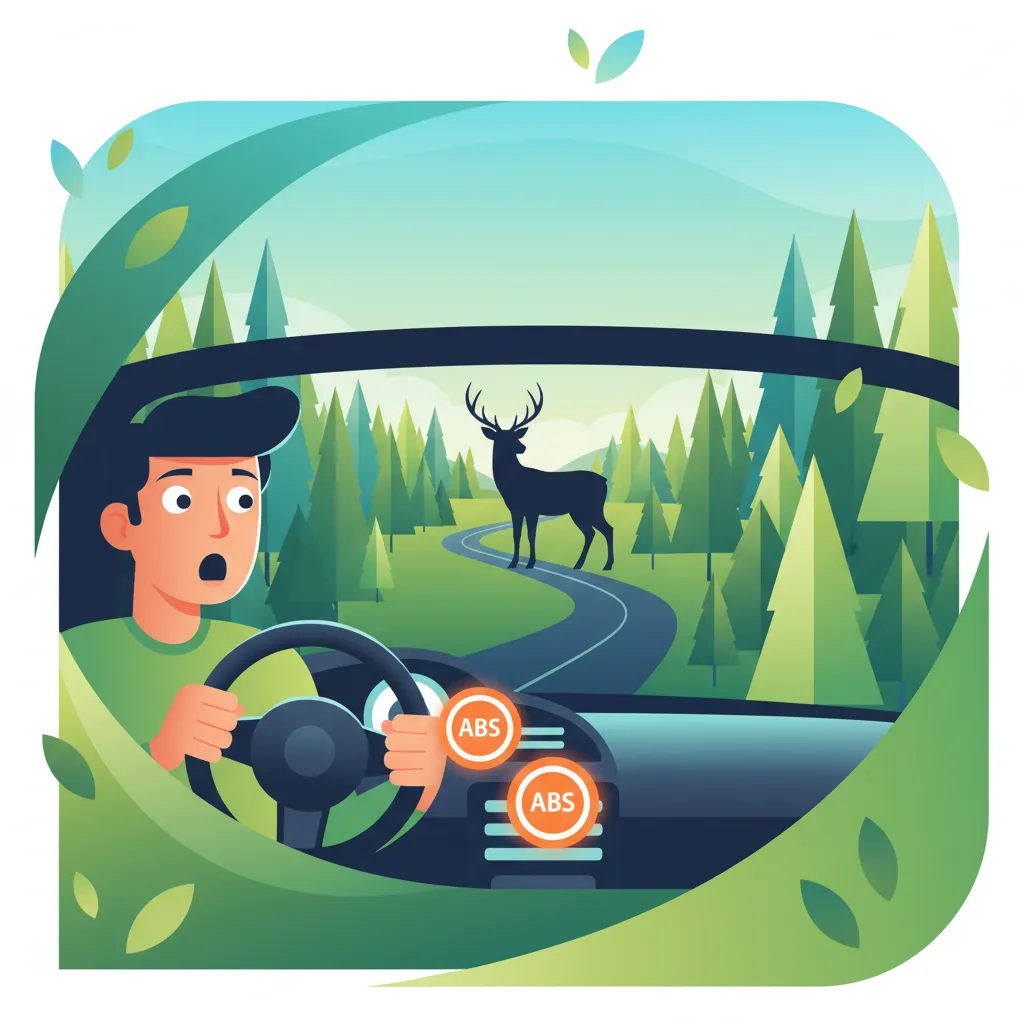
Stay in Control: React Safely in Swedish Emergency Braking Situations.

Drive Smarter and Safer: Conquer Slippery Conditions with Expert Techniques.
Master the Complexities of Rural Overtaking for Your Swedish Driving Exam

Anticipate Hazards, React Safely: Drive Defensively on Swedish Roads
Questions in Wildlife Response
Exam focused questionss
Wildlife Response offers quick, focused exam style practice to boost your Swedish knowledge for the driving theory exam in Sweden.
Wildlife Response helps learners in Sweden with clear explanations and targeted Swedish practice to improve essential driving theory topics.
This set is for intermediate learners preparing for their Swedish driving theory exam who want to improve their reaction skills in emergency situations. It addresses common uncertainties about how to react safely to sudden wildlife appearances, helping you avoid critical mistakes and build confidence for your test and real-world driving.
Explore more topics for the Swedish driving theory exam in Sweden.