
Winter driving presents unique challenges, especially regarding safe following distances. This category focuses on the critical techniques needed to adapt your speed and distance on slippery surfaces, ensuring you're prepared for the Swedish theory exam and can drive safely in snow and ice.
Train with focused, exam-style practice sets covering everything you need to know about Following Distance in Winter Conditions. Each set helps you apply rules, recognise situations, and build confidence with the types of questions used in the Swedish driving theory exam in Sweden.
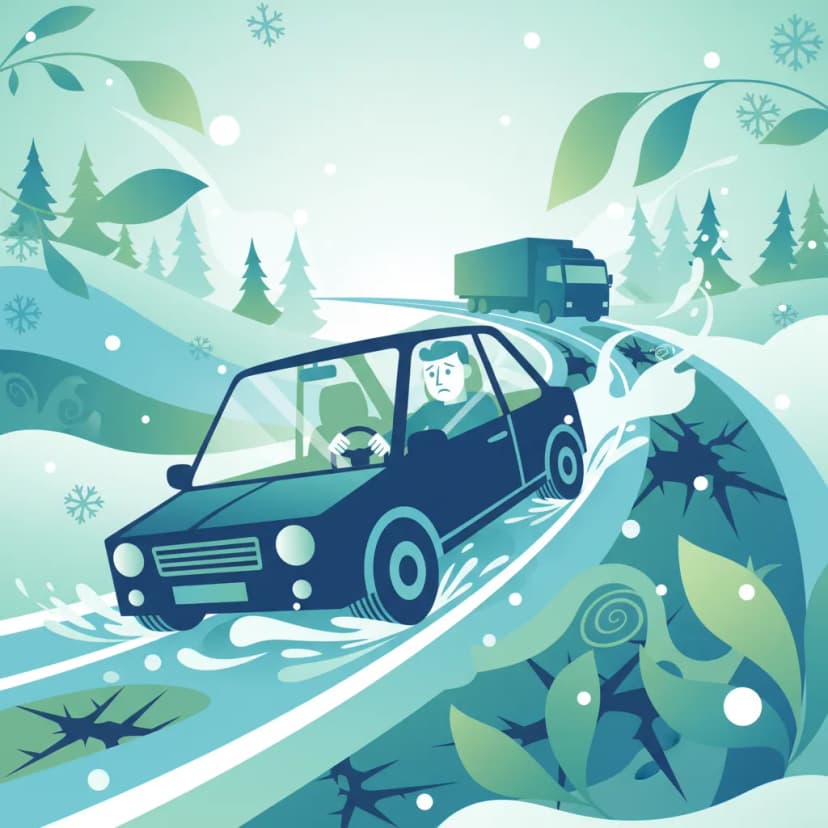
Master the Art of Safe Distances on Icy Swedish Highways – Essential for Your Theory Exam.

Master the hazards of slush and melting snow for a safer drive and a successful exam.
Mastering winter driving distances is vital for your Swedish theory exam and road safety. Poor judgement on slippery surfaces leads to accidents. This practice category sharpens your ability to adapt, crucial for passing your test and navigating Sweden's winter roads confidently and securely.
Learners in Sweden choose Following Distance in Winter Conditions practice to prepare for realistic exam questions and difficult scenarios that often appear in the official theory test. This category is popular because it helps strengthen rule knowledge, reduce common mistakes, and build confidence before taking the Swedish driving theory exam.
All practice sets available
Practice sets in Following Distance in Winter Conditions
Practising Following Distance in Winter Conditions helps you understand key rules and situations tested in the Swedish driving theory exam in Sweden.
Get answers to common questions learners have about practising Following Distance in Winter Conditions. This section highlights what is tested, how practice helps, and how to improve your results for the Swedish driving theory exam in Sweden.
The Swedish theory exam includes questions that test your understanding of how reduced grip affects braking distances and the need for significantly longer following distances during winter. You'll encounter scenarios requiring you to select the correct distance or identify safe driving practices in winter conditions.
Driving in winter, with snow and ice, drastically increases braking distances. Failing to maintain a safe distance significantly raises the risk of collisions. Practising this helps you internalise the necessary adjustments for safer winter driving and achieve a better score on the theory test.
Learners often underestimate how much longer braking takes on slippery surfaces. They may also struggle to accurately judge safe distances visually. This category helps build that judgement and understanding for both the exam and real-world driving.
By focusing on the specific rules and scenarios related to winter driving distances, these practice questions mirror those found in the official Trafikverket theory exam. This targeted practice builds your knowledge and confidence, reducing the chance of errors on test day.
Swedish traffic law emphasizes adapting driving to conditions. While exact meters aren't always prescribed, the principle is to increase distances significantly based on visibility, road surface grip, and speed. This category helps you understand these principles for the exam.
Explore other practice categories connected to Following Distance in Winter Conditions. These sections help you practise additional topics, strengthen your understanding of driving theory in Sweden, and prepare more completely for the theory exam.