When stopped by police on Swedish roads, knowing your rights and responsibilities is essential for a smooth and safe interaction. This guide details how to respond respectfully and effectively, ensuring you understand the legal framework governing traffic stops. This knowledge is vital for safe driving practice and can be a key topic for the Swedish driving license theory test.
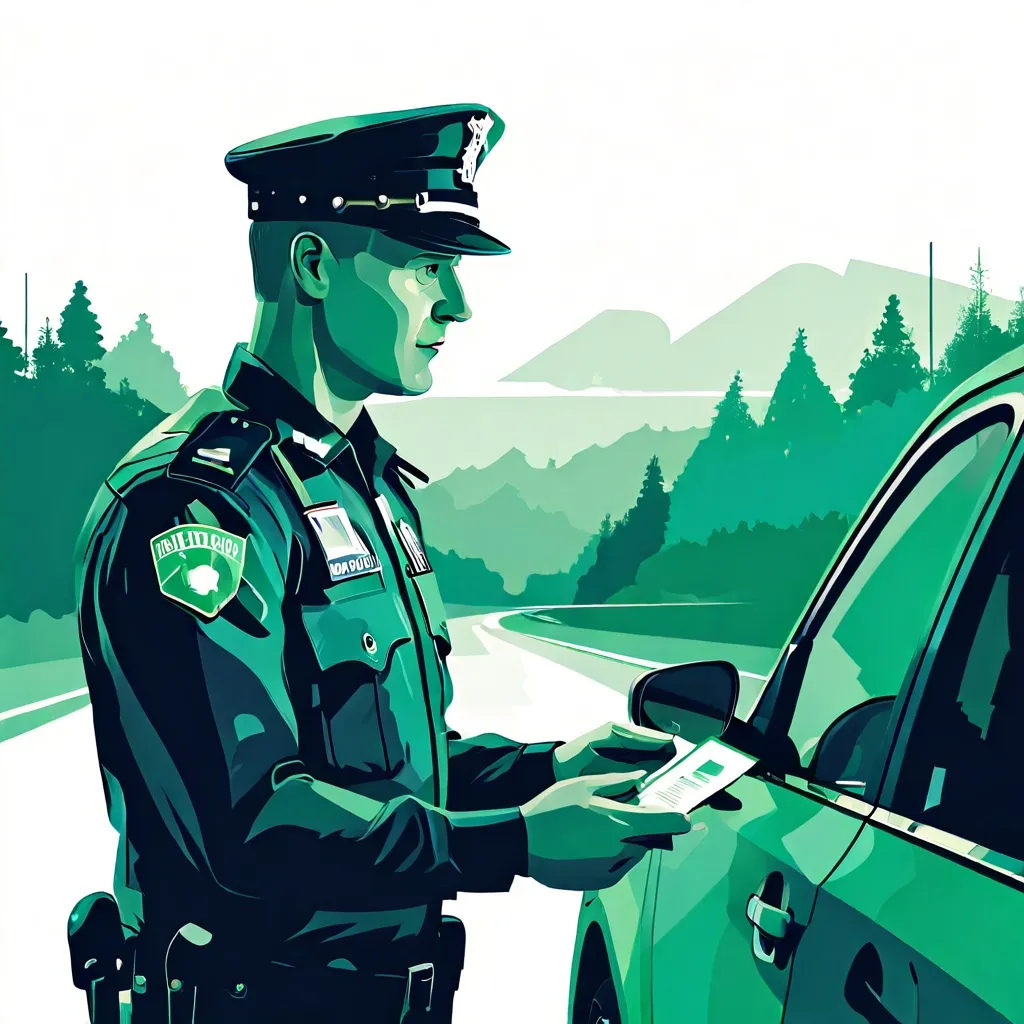
When you’re behind the wheel in Sweden, encountering a police traffic stop is a possibility, and knowing how to navigate these situations calmly and correctly is essential for both your safety and legal compliance. This guide aims to demystify the process, outlining your rights and responsibilities as a driver when interacting with Swedish law enforcement during a traffic stop. Understanding these procedures is crucial for safe driving behaviour and can be a significant topic in your Swedish driving theory exam, helping you avoid common pitfalls and approach such encounters with confidence.
Police traffic stops, often referred to as "trafikkontroller" or "vägkontroller," serve a vital purpose in maintaining road safety and upholding traffic laws across Sweden. Authorities such as the Polisen (Police) conduct these checks to ensure that vehicles are roadworthy, that drivers are adhering to speed limits and other regulations, and to prevent serious offences like driving under the influence. These routine inspections are designed to reduce accidents caused by technical defects, impaired driving, or reckless behaviour, ultimately contributing to a safer road environment for everyone.
As a driver in Sweden, you have specific rights when stopped by the police. It's important to be aware of these to ensure the interaction is conducted fairly and legally. The police have the authority to stop you for various reasons, but they must act within the framework of Swedish law. For instance, if a police officer intends to inspect your vehicle, their authority is clearly defined. They can also request to see your driver's license and vehicle registration documents, which you are legally obligated to provide.
While you must comply with lawful requests, you also have the right to be treated with respect. If you believe an interaction is unfair or unlawful, you have the right to lodge a complaint through the appropriate channels after the stop has concluded. However, it's paramount to remain calm and cooperative during the stop itself.
Cooperation and respect are key when a police officer signals you to stop. Your primary responsibility is to pull over safely to the side of the road at the first possible safe opportunity. This means indicating your intention to pull over and moving your vehicle to a location that does not obstruct traffic and is safe for both you and the officer. Once stopped, it is expected that you remain in your vehicle unless otherwise instructed by the officer.
You must present your valid driver's license (körkort) and vehicle registration documents upon request. These documents are proof of your ability to drive and that the vehicle is legally registered. Answering the officer's questions truthfully and calmly is also a crucial part of your responsibility during a traffic stop.
Swedish police officers have the authority to conduct various checks during a traffic stop to ensure road safety and compliance with regulations. These checks can include verifying your driver's license and the vehicle's registration. They may also perform a visual inspection of the vehicle to identify any obvious defects that could compromise safety, such as issues with lights, tires, or wipers.
More comprehensive checks might involve assessing your sobriety, especially if there are any indications of impairment. They can also check if your vehicle is overloaded or if it carries the necessary safety equipment, such as warning triangles.
In cases where a police officer or a trained 'bilinspektör' suspects more serious technical issues, your vehicle might be directed for a more thorough inspection. If significant faults are discovered that render the vehicle unsafe, the police have the power to issue an immediate 'körförbud' (driving ban) until the issues are rectified.
'Körförbud' is a serious consequence where a vehicle is prohibited from being driven on public roads. This can occur if a vehicle fails a mandatory inspection ('besiktning') and the identified faults are not repaired, or if significant safety defects are discovered during a roadside check by the police. If your vehicle is issued a 'körförbud', you must have it repaired immediately and then have it inspected again to have the ban lifted. Driving a vehicle with a 'körförbud' is a serious offence.
Theory test questions in Sweden often focus on how to react in situations involving police. For example, you might be asked about your responsibility when a police officer signals you to stop or what to do if your vehicle is deemed unsafe. Understanding the roles of the police and the 'bilinspektör', and the implications of a 'körförbud', are crucial for passing the knowledge test. The concept of 'blixtlåsprincipen' (zipper merge) is unrelated to police stops but highlights general cooperation in traffic, which is a good analogy for cooperating with officers.
The Swedish Transport Agency (Transportstyrelsen) provides comprehensive guidelines on traffic rules and driver responsibilities, which form the basis of the theory exam. Being prepared for questions about police interactions will ensure you demonstrate a thorough understanding of Swedish traffic law and safe driving practices.
Ultimately, interactions with police during traffic stops in Sweden are about ensuring public safety. By understanding your rights, fulfilling your responsibilities, and maintaining a calm and cooperative attitude, you can ensure these encounters are handled smoothly and efficiently. This knowledge not only prepares you for real-world driving but also equips you to confidently answer relevant questions on your Swedish driving license theory exam.
Article content overview
Explore related topics, search based questions, and concepts that learners often look up when studying Police Traffic Stops in Sweden. These themes reflect real search intent and help you understand how this topic connects to wider driving theory knowledge in Sweden.
Find clear and practical answers to common questions learners often have about Police Traffic Stops in Sweden. This section helps explain difficult points, remove confusion, and reinforce the key driving theory concepts that matter for learners in Sweden.
When signalled by a police vehicle, you should safely pull over to the side of the road, turn off your engine, and wait for the officer's instructions. Remain calm and in your vehicle unless asked to exit.
In Sweden, you have the right to be treated with respect, to understand why you were stopped, and to remain silent if you feel it necessary. You also have the right to have a lawyer present if the situation escalates to an arrest or detention.
Your primary responsibilities include cooperating respectfully with the officer, providing your driver's license and vehicle registration when asked, and following lawful instructions promptly. Avoid arguing or making sudden movements.
Yes, Swedish police can conduct routine checks, such as for alcohol consumption (trafiknykterhetskontroll) or vehicle safety, without needing specific suspicion, provided they follow proper procedures and identify themselves clearly.
If you do not understand the officer, politely ask them to repeat or clarify their instructions. If language is a significant barrier, the officer may arrange for an interpreter if necessary, especially in more serious situations.