Master the intricate priority rules governing Swedish roundabouts and junctions to ensure safe driving and success on your theory exam. This guide provides essential knowledge on who has the right-of-way in various intersection types, focusing on the critical principle of yielding to traffic already present in a roundabout, a common point of confusion for learners.
Understanding Sweden's traffic rules, particularly those governing junctions and roundabouts (known locally as 'rondeller'), is fundamental to passing your driving theory exam and ensuring safe travel on Swedish roads. This guide dives deep into the priority rules that dictate who has the right-of-way in various intersection scenarios, focusing on the nuances that often challenge new drivers and are frequently tested by Trafikverket. By mastering these principles, you can confidently navigate Sweden's complex road network and avoid common pitfalls.
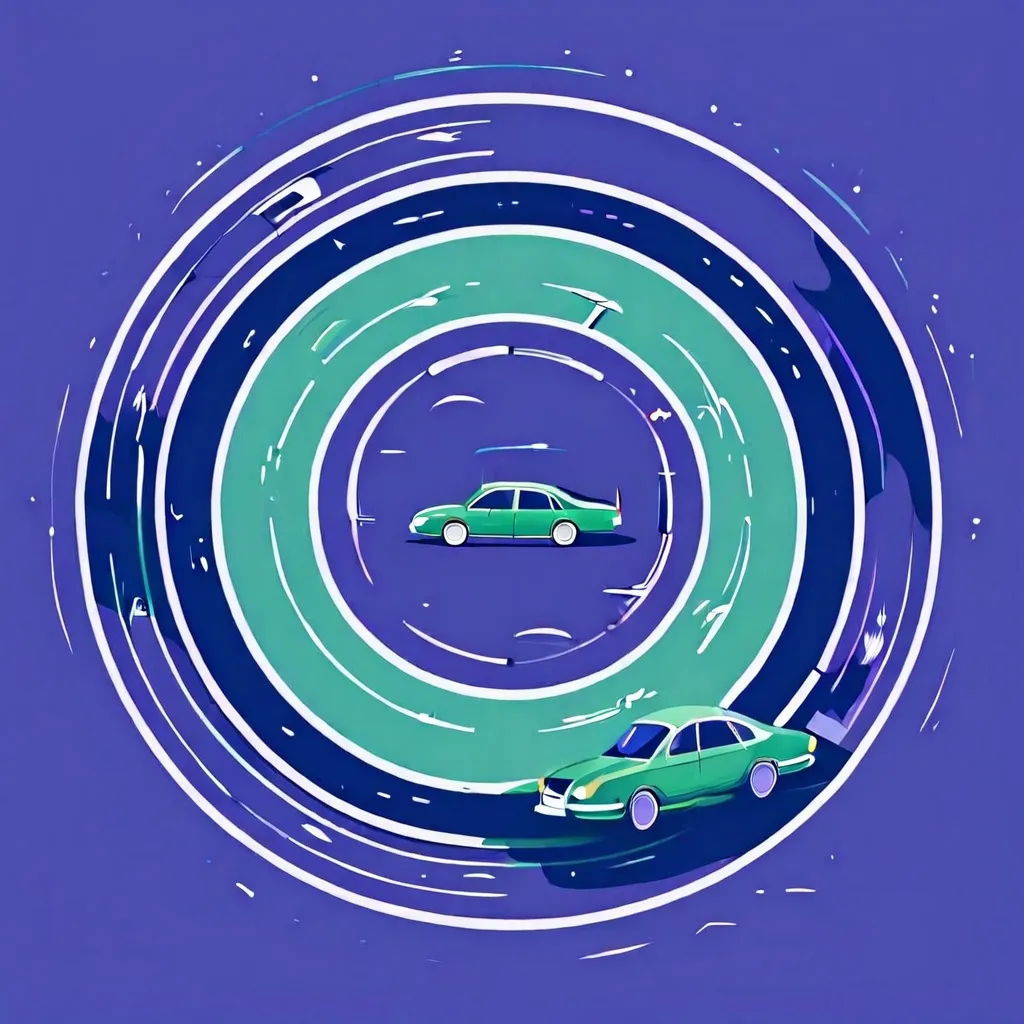
Swedish roundabouts are designed to improve traffic flow and enhance safety compared to traditional crossroad junctions, primarily by forcing all entering traffic to reduce speed and by consolidating merging points. A fundamental rule to remember is that traffic already within a roundabout generally has priority. This means you must always yield to vehicles that have entered the roundabout before you.
When approaching a roundabout, observe any traffic signs or road markings that might indicate specific lane usage or priority situations. If no specific instructions are given, your lane choice should depend on your intended exit. For exits to the right or proceeding straight ahead, it is generally advisable to position your vehicle in the right-hand lane as you enter. Conversely, if you intend to turn left or make a U-turn, you should position yourself in the left-hand lane. This proactive lane selection helps signal your intentions to other drivers and facilitates smoother traffic flow.
Remember that once you are inside the roundabout, you must give way to vehicles already in the circle. This applies even if you are in a different lane. Signalling your exit is crucial; you must activate your right turn signal before you reach the road you intend to leave the roundabout onto. If you are exiting at the first road, you should signal right as you enter the roundabout. For any subsequent exits, you signal right just before reaching your intended exit road. Failing to signal correctly can lead to confusion and potential accidents, which is a common area of focus in the theory exam.
Swedish junctions, whether marked or unmarked, present a variety of priority scenarios that drivers must comprehend. The core principle, especially in unmarked junctions, is the 'right-hand rule' (högerregeln), which dictates that you must yield to traffic approaching from your right. However, this rule is subject to numerous exceptions, making careful observation and understanding of traffic controls paramount.
When approaching any junction, your first step should be to identify any traffic signs or road markings that alter the default priority. Signs like the "Priority Road" sign (B1) grant you priority on the road you are on, meaning traffic on intersecting roads must yield to you. Conversely, signs like "Give Way" (A1) or "Stop" (A3) impose a duty to yield or stop, respectively.
Even when you have priority, you must always exercise caution. Traffic signals and police officers can override any signage. Furthermore, you must be aware of vulnerable road users such as pedestrians and cyclists, who often have specific rights of way at crossings and on cycle paths, even if the general priority rules would suggest otherwise.
Certain situations require special attention. For instance, when exiting a property onto a road, you always have a duty to yield to all traffic on that road, as well as to pedestrians on any adjacent pavement or cycle path. Similarly, when entering a road from a side road without clear priority signs, the right-hand rule typically applies, but always check for signs indicating otherwise.
In built-up areas, junctions can be particularly complex. Always be mindful of the possibility of vehicles turning left, which might be executing this manoeuvre across your path if you are proceeding straight or turning right. In such cases, the vehicle intending to turn left usually has the responsibility to yield, but this can vary depending on the specific road layout and signage. The theory exam often presents scenarios testing these interactions, focusing on ensuring you can predict potential conflicts and react safely.
Swedish traffic law places a strong emphasis on protecting vulnerable road users, particularly pedestrians and cyclists. Understanding their rights at crossings, cycle paths, and junctions is vital. At designated pedestrian crossings ('övergångsställen') and bicycle crossings ('cykelöverfarter'), drivers have a significant responsibility.
When approaching a pedestrian crossing, you must always be prepared to stop. If a pedestrian has entered the crossing or is about to enter, you must let them pass. This obligation remains even if you have a green light at a signal-controlled junction. Similarly, at a bicycle crossing, you must yield to cyclists who have entered or are about to enter the crossing. The principle of 'on the right side' ('på rätt sätt') applies here; the pedestrian or cyclist must be acting according to the traffic signals or general rules when they enter the crossing to have their right of way fully enforced.
Even at unmarked bicycle crossings ('cykelpassager'), where specific crossing markings might be less prominent or absent, drivers must adapt their speed to ensure no danger arises for cyclists. If you are turning or exiting a roundabout and crossing a cycle path, you must do so at a low speed and allow cyclists to pass. While cyclists generally have priority on cycle paths, they also have a duty to cross safely and must yield to vehicles when entering a road from a cycle path if it can be done without danger.
The Swedish theory exam frequently tests your understanding of priority rules through complex scenarios. One common trap involves unmarked intersections where the right-hand rule seems applicable, but specific signage or road layout alters priority. Always conduct a thorough scan of the intersection for signs, markings, and potential hazards before proceeding.
Another area of focus is the interaction with buses and trams. Buses, especially those stopping at designated stops without refuges, may require you to stop and allow passengers to disembark or board safely. Similarly, trams have an inherent right of way and must be treated with utmost respect.
When approaching a junction where one road is significantly narrower or appears to be a minor access point, it's crucial not to assume you have priority. Always rely on the official traffic signs and markings. The general principle is that a driver entering a traffic lane or road from a property entrance must yield to all traffic already on that road.
To help you prepare for your Swedish driving theory exam, understanding these key terms is essential:
Successfully navigating Swedish roundabouts and junctions requires not only understanding the rules but also applying them consistently in various traffic situations. The Swedish Transport Administration ('Trafikverket') designs its theory exams to assess this practical application. Familiarising yourself with common scenarios and potential exam traps is key to building confidence.
By studying the principles of yielding, observing signs, and anticipating the actions of other road users, you will be well-equipped to tackle the challenges of Swedish intersections and pass your driving theory test with flying colours. Remember that safe driving is about being predictable, courteous, and always ready to adapt to unexpected situations.
Article content overview
Explore related topics, search based questions, and concepts that learners often look up when studying Swedish Roundabouts & Junctions. These themes reflect real search intent and help you understand how this topic connects to wider driving theory knowledge in Sweden.
Find clear and practical answers to common questions learners often have about Swedish Roundabouts & Junctions. This section helps explain difficult points, remove confusion, and reinforce the key driving theory concepts that matter for learners in Sweden.
When entering a Swedish roundabout, you must always give way to traffic that is already circulating within the roundabout. This unconditional priority applies to all vehicles already inside the rondell.
Generally, the rule to yield to traffic already in the roundabout is unconditional. However, larger roundabouts might be regulated by traffic signals, which would override the standard priority rule. Always check for traffic signs and signals.
At regular junctions, priority rules can vary based on signs, markings, and the 'right-hand rule' (högerregeln). Roundabouts are simpler as they almost always grant priority to vehicles already within the circle, requiring you to yield upon entry.
In an unregulated junction where no signs or signals dictate priority, the 'right-hand rule' (högerregeln) applies. The vehicle on the right has the right-of-way, meaning you must yield to traffic approaching from your right.
No, the 'right-hand rule' does not apply to entering a roundabout. The primary rule for roundabouts is to always yield to vehicles already present in the roundabout, regardless of their direction of travel within it.