
Many learner drivers in Sweden hold misconceptions about traffic laws, speed limits, and the duties of road users, which can lead to confusion and dangerous situations. This article clarifies these common myths, providing accurate explanations grounded in Swedish traffic rules and Trafikverket guidelines. Understanding these points is essential for passing your theory exam and becoming a responsible driver.
Many learner drivers in Sweden hold misconceptions about traffic laws, speed limits, and the duties of road users, which can lead to confusion and dangerous situations. This article clarifies these common myths, providing accurate explanations grounded in Swedish traffic rules and Trafikverket guidelines. Understanding these points is essential for passing your theory exam and becoming a responsible driver.
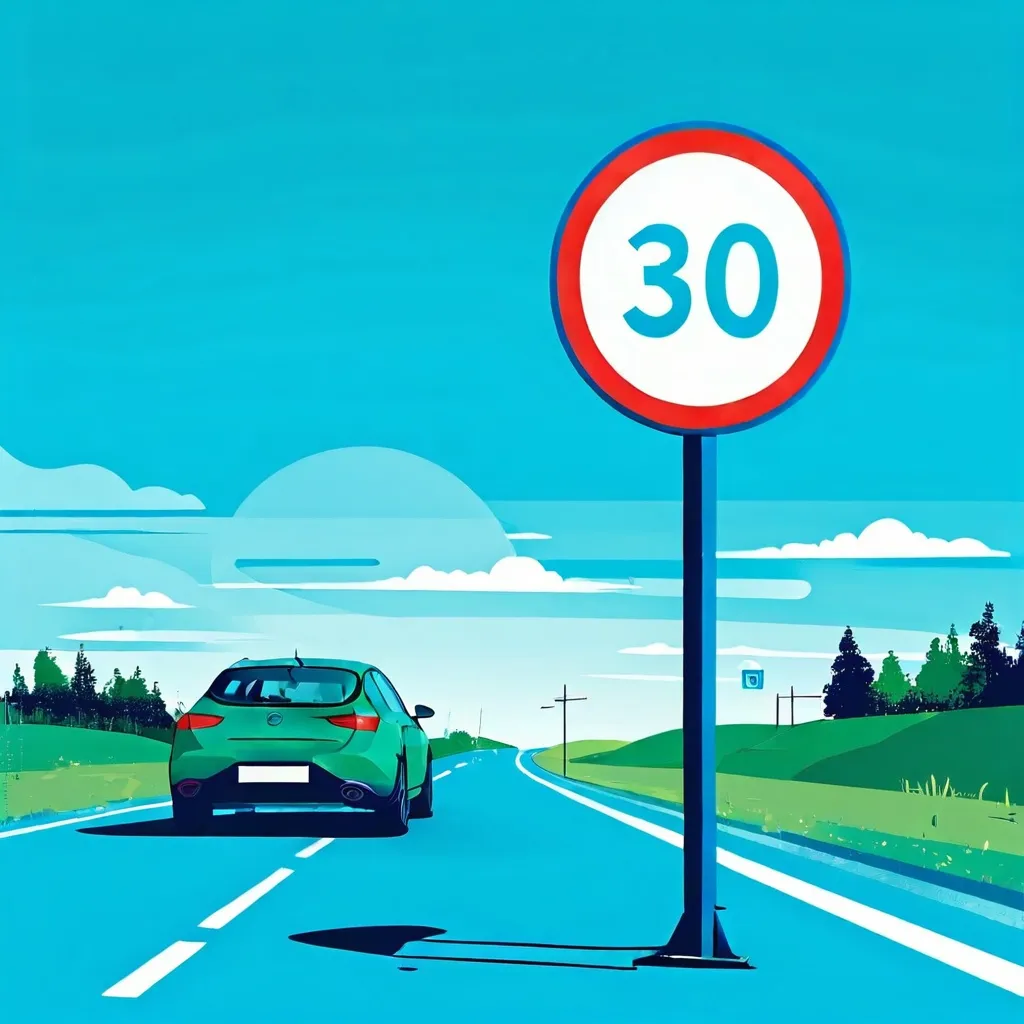
A frequent area of confusion for new drivers in Sweden revolves around speed limits. While many are aware of the general national speed limits (e.g., 50 km/h in urban areas and 70 km/h outside, unless otherwise signed), the actual application and exceptions can be a source of common errors. It's crucial to remember that these are default speeds, and actual limits can vary significantly based on road conditions, specific signage, and the type of vehicle.
For instance, a common myth is that 50 km/h is always the maximum speed within any built-up area. While this is the general rule on roads not explicitly signed otherwise, many urban roads have lower limits, particularly near schools, residential areas, or accident hotspots. Conversely, some main roads within urban areas might permit higher speeds if indicated by signs. Learners must understand that diligent observation of road signs is paramount, rather than relying solely on default assumptions. The Swedish Transport Agency, Trafikverket, emphasizes that adapting speed to prevailing conditions—such as weather, traffic density, and road surface—is a fundamental aspect of safe driving and a common theme in their theory assessments.
Remember, the stated speed limit is the maximum permissible speed. You must always drive at a speed that is safe for the current conditions, which may be considerably lower than the posted limit.
Beyond posted limits, Swedish traffic law places a strong emphasis on the driver's responsibility to adjust their speed based on actual conditions. Driving at the maximum allowed speed during heavy rain, dense fog, or icy conditions is not only unsafe but also a violation of the general duty to drive with care and consideration. The theory exam often presents scenarios designed to test this understanding, posing questions about how speed should be adjusted in adverse weather or visibility. Trafikverket’s guidance stresses that contributing to traffic safety is a primary responsibility for all road users.
Priority situations are notoriously tricky, and common misunderstandings can lead to significant risks. While the "högerregeln" (right-hand rule) at unmarked intersections is a well-known concept, its application and the exceptions to it are often misrepresented. The general principle is that you must give way to vehicles approaching from your right at intersections where no other priority rules apply. However, this rule does not supersede other, more explicit, signs or signals.
It's a common mistake to assume the right-hand rule always applies, even when approaching a road that is clearly a major thoroughfare from a minor side road, or when signs like the "Väjningsplikt" (Yield) or "Stopp" (Stop) signs are present. These signs always take precedence over the general right-hand rule. Furthermore, drivers must also be aware of situations where priority is granted to certain types of vehicles or traffic. For example, trams and vehicles in designated queues, such as those formed by public transport, often have special priority.
Another frequent point of confusion is the priority given to emergency vehicles. If an emergency vehicle is using its audible or visual signals, all other traffic must immediately make way and yield. This is a non-negotiable rule, and failing to do so can have severe consequences. Similarly, specific situations like military convoys or funeral processions might also be granted special passage, requiring other road users to exercise extreme caution and yield if necessary.
Never assume you have priority. Always scan for traffic and be prepared to yield, especially at complex intersections or when unsure of the rules. Misinterpreting priority is a leading cause of collisions.
Driving theory in Sweden extends beyond the mechanics of operating a vehicle; it encompasses a broader understanding of a road user's responsibilities. A prevalent myth is that once you are on the road, your sole focus should be on your own vehicle and journey. In reality, Swedish traffic law requires every road user to exercise care and consideration towards all others.
This includes showing particular consideration for vulnerable road users such as children, the elderly, and individuals with disabilities. It also means not unnecessarily hindering or disturbing other traffic or those residing near the road. The principle of "lättsamhet" (easygoingness) and mutual respect is deeply embedded in Swedish road culture and is a critical component of the theory test. Drivers are expected to anticipate the actions of others and react defensively to potential hazards, not just reactively to immediate dangers.
The "blixtlås" principle, or zipper merge, is a concept that often causes friction and misunderstanding. At a road closure or bottleneck where two lanes merge into one, drivers are expected to cooperate by taking turns to enter the single lane, much like the teeth of a zipper. The myth here is that one should merge as early as possible, often leading to aggressive lane changes or blocking traffic.
The correct application of the zipper merge, as taught by Trafikverket, is to continue in your lane until the merge point and then alternate with vehicles from the other lane. This method is generally more efficient and reduces congestion. Understanding and applying such cooperative principles is essential for smooth and safe traffic flow, and it's a topic frequently explored in theory exam questions related to traffic flow and driver behaviour.
The Swedish driving theory exam, administered by Trafikverket, is designed to assess a deep understanding of traffic rules, safety, and responsible behaviour. Beyond simply memorising rules, learners must grasp the underlying principles and be able to apply them to various traffic scenarios. Understanding common myths and misconceptions directly helps in preparing for these assessments, as exam questions often probe these very areas.
A key pitfall is not appreciating the hierarchical order of traffic instructions. When faced with conflicting signals, such as a red traffic light and a police officer directing traffic to proceed, many learners struggle to identify the correct priority. Trafikverket clarifies this hierarchy: police signals always take precedence, followed by traffic signals, then road signs, and finally, the general traffic rules. Failing to understand this can lead to dangerous situations and incorrect answers on the exam.
Sweden boasts a remarkably high level of road safety compared to many other countries, a fact often highlighted in official statistics. However, even with declining numbers of fatalities and injuries over decades, the goal is zero. Understanding the historical context and the continuous efforts towards improving road safety can reinforce the importance of adhering to all traffic laws and adopting a safety-conscious mindset. The exam often touches upon safety culture and the shared responsibility of all road users in achieving this goal.
By addressing these common myths and focusing on the principles behind Swedish traffic law, learner drivers can build a solid foundation for safe driving and improve their chances of success in the theory exam.
Article content overview
Explore related topics, search based questions, and concepts that learners often look up when studying Swedish Traffic Law Myths. These themes reflect real search intent and help you understand how this topic connects to wider driving theory knowledge in Sweden.
Find clear and practical answers to common questions learners often have about Swedish Traffic Law Myths. This section helps explain difficult points, remove confusion, and reinforce the key driving theory concepts that matter for learners in Sweden.
While 50 km/h is the general default speed limit in built-up areas, it's not universal. Always check for specific speed limit signs, as variations exist for different road types within urban environments.
Yes, priority rules are a common area of confusion. Learners may incorrectly assume right-of-way in situations where they must yield, or vice versa, leading to potential accidents. It's crucial to understand situations like the 'högerregeln' (right-hand rule) and when it applies.
A prevalent myth is underestimating the duty of care towards children, the elderly, or those with disabilities. Swedish law requires particular consideration for these groups, and failing to do so can have serious consequences.
Yes, unnecessarily hindering or disturbing traffic is against the law. This includes causing obstructions or impeding the flow of traffic, even if not due to excessive speed. Drivers must always act with care and consideration.
Indeed. Some may believe hands-free devices are completely exempt from scrutiny, but the law focuses on whether the device use distracts the driver. It's safest to avoid all mobile phone use while driving.